
Garth Grimball
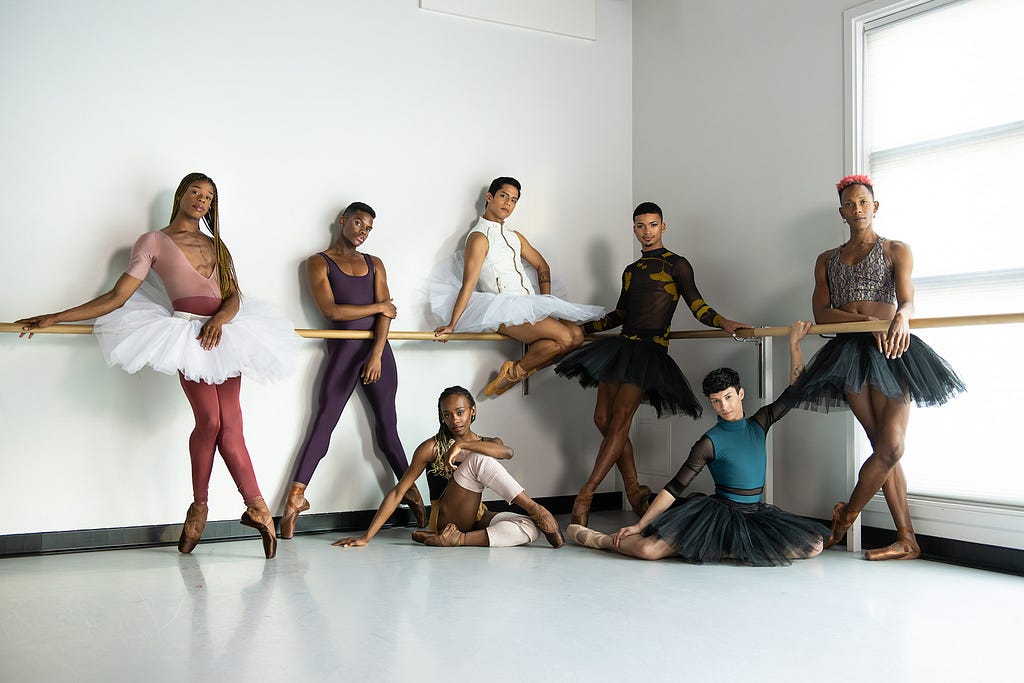
Rare is the dance company whose mission statement is explicitly legible on stage. Ballet22 is one such company. In the absence of neologisms or vague references to communitarian ideals there is the company’s mission to produce work that presents male and non-binary artists dancing en pointe. And that they do.
On Aug 9–11, Ballet 22 presented Summer Season 2024 at ODC Theater. This is the company’s second season under the leadership of Executive Director & Co-Founder Theresa Knudson and Co-Directors Lorris Eichinger and Daniel R. Durrett. Like last year’s season, 2024 began with repertory from the Classical canon followed by contemporary works and new commissions.
The program opened with excerpts from Acts I & II of Giselle. As the oldest ballet still performed, Giselle has been danced so many times by so many dancers under so many artistic directors, that reviews no longer focus on the choreography or narrative but on the interpretation and staging. The Giselle variations performed by Ballet22 are some of the most technically difficult solos in ballet. This was especially evident in the intimate setting of the 171-seat theater and without contextual support of the village or forest sets. Nevertheless, the dancers prevailed, and in moments, shined. Most of the Act I solos saw shaky starts that seemed more the result of nerves than lack of skill. Whether a turn fell off center or there was a stumble, the Ballet22 dancers know how to be on stage, how to perform. Their recoveries, their charisma, their love of dancing enlivened the well-trod choreography.
Houston Thomas, formerly a dancer with Dresden Semperoper Ballett, provided two works for the second half of the program. Solo02: KANA was a brief, spritely solo danced by Kobe Courtney. Courtney’s height brought a regality to the repeated weight shifts in the choreography. The solo ended with a pivot from upstage to downstage that Courtney embodied with such sting it felt like a chapter that ends on a cliffhanger.
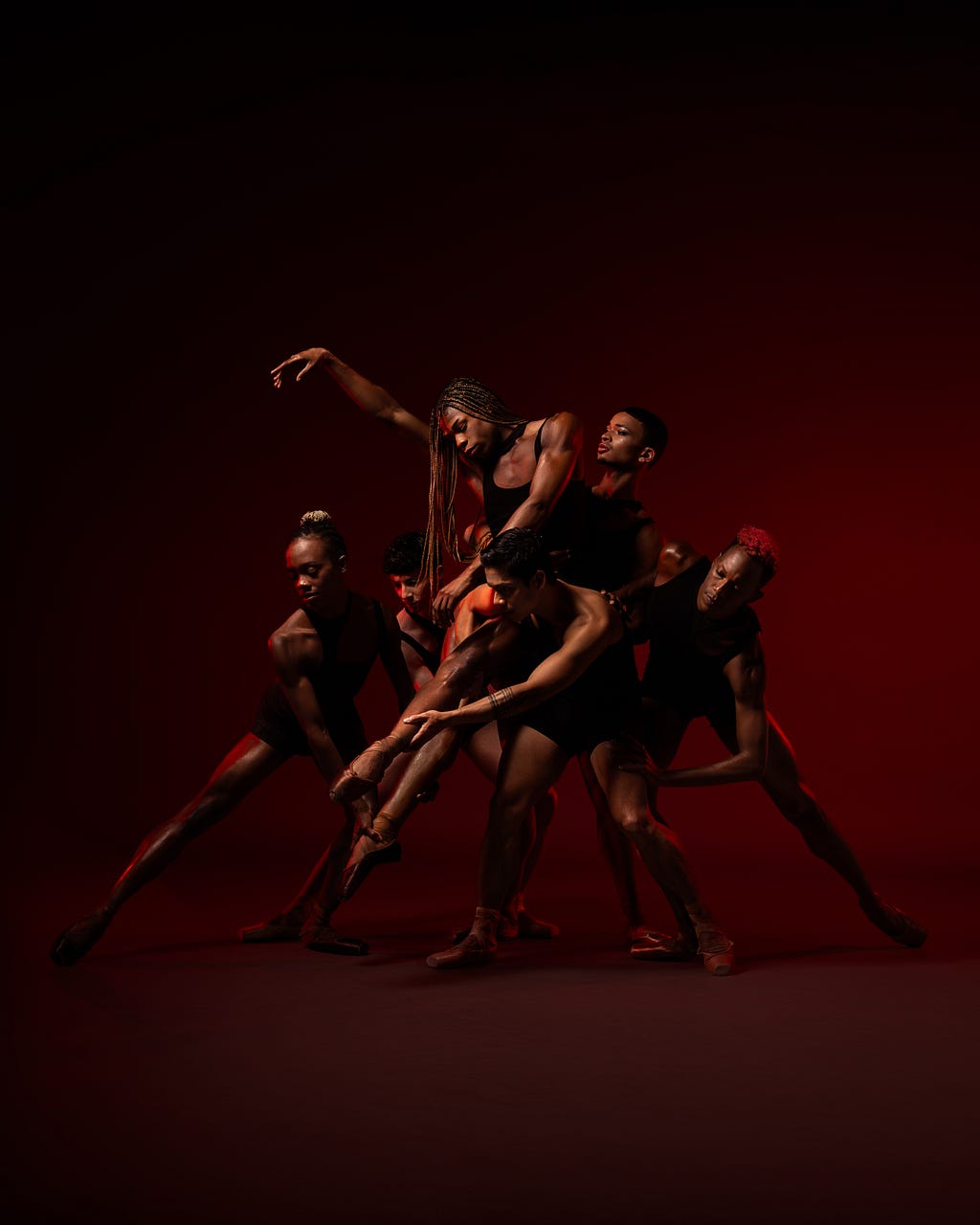
Thomas’s Bass Am Wasser, danced by Courtney, Durrett, Zsilas Michael Hughes, and Victor Maguad was a bouquet of canons and bouncing pulses. Dressed in black tank-topped unitards with jewel toned evening gloves, the dancers bopped and bourree’d to Johannes Goldbach’s electronic rhythms. While the gloves emphasized the port de bras, it was the epaulement that impressed. The negative space between the jaw and the collarbone was thick with invitation.
As a soloist with Boston Ballet, Durrett has developed a professional relationship with William Forsythe, whose works have entered Ballet22’s repertory. Durrett staged and performed an excerpt of Forsythe’s Approximate Sonata, a suite of duets choreographed in 1996, revised in 2016. The dance is accompanied by his frequent collaborator Thom Willems, whose score is sparse and echoey. Durrett danced with Ashton Edwards, and both are excellent interpreters of Forsythe’s past-the-limits style. The arms move in constant rotations from within the rotator cuff and through space around the body. Durrett and Edwards spun and extended in counterpoint to each other like spiders spinning an elegant web.
Love Me Tender, a premiere, was a standout in the program. As a premiere it has the advantage of being created on the dancers, so it was danced with a deeper sense of ensemble. Christian Denice, recently artist-in-residence at the Peabody Conservatory, choreographed the trio on Edwards, Maxfield Haynes, and Trevor Williams. The dancers traded in pointe shoes for socks and loose black separates. Set to songs by Perfume Genius, the trio repeatedly connected in a huddle only to have one dancer break through the clasped arms of the other two. Body half folds, enveloppé, développé, pushes and pulls, all contributed to a sense of realignment, of figuring out a sequence that results in wholeness.
Garth Grimball is the editor of Dance Stories. His writing has been featured in SF Examiner, Dance Media publications, and Life As A Modern Dancer.
Ballet22 Points To The Past And Future was originally published in ODC.dance.stories on Medium, where people are continuing the conversation by highlighting and responding to this story.