
Ki’ Shae Qetlah
Recently, I had the opportunity to attend the 75th iteration of ODC’s Pilot Program entitled, Dig. The pilot program is an 11-week mentorship initiative which offers an embracive choreographic experience for distinct, emerging artists. The process culminated by a weekend-long showcase of dynamic performances and to say the least, the show was truly an inspiration.
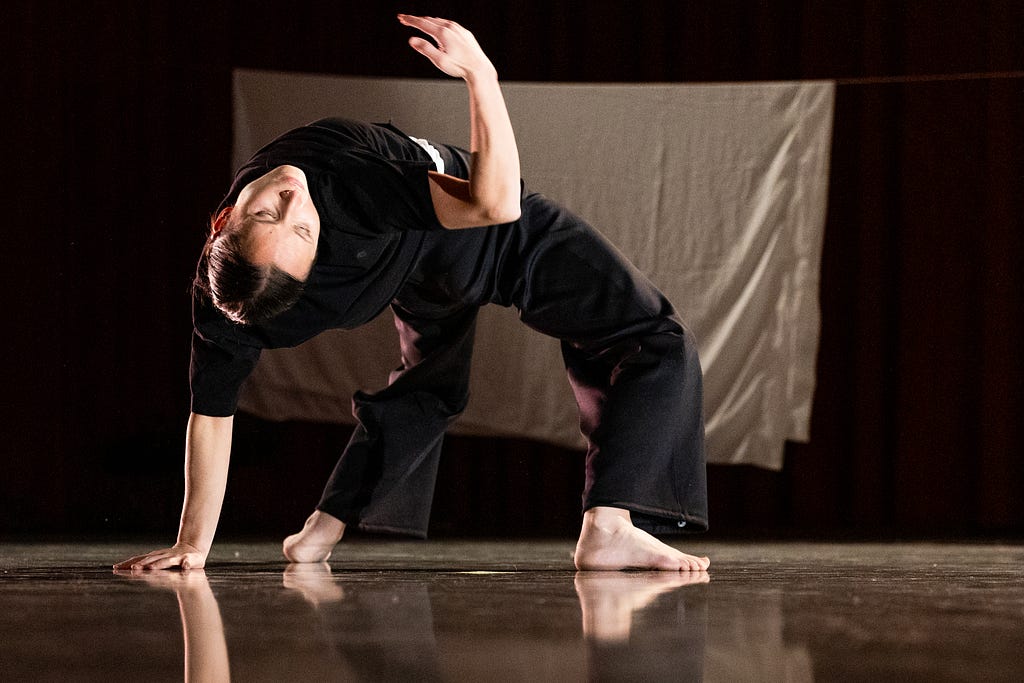
The first piece of the evening, Crossing, was a solo created and performed by Ria Fifield. The stage was dimly lit by one cold front light which illuminated a string outstretching the length of the black-marleyed stage. Draped across the string were stark, white sheets and the room felt frigid…even lonely. Fifield was seated behind a sheet outside of the viewer’s gaze. All that was seen was a dark figure of a person, Fifield’s reflection, something akin to a human face and body though not quite. What followed were the sounds of Fifield’s voice reciting a poem which felt like prose and heavy-bass instrumentals as the soloist revealed herself — seemingly to utilize spirited transitions amongst escaping limbs to navigate inherent emotion against those inherited.
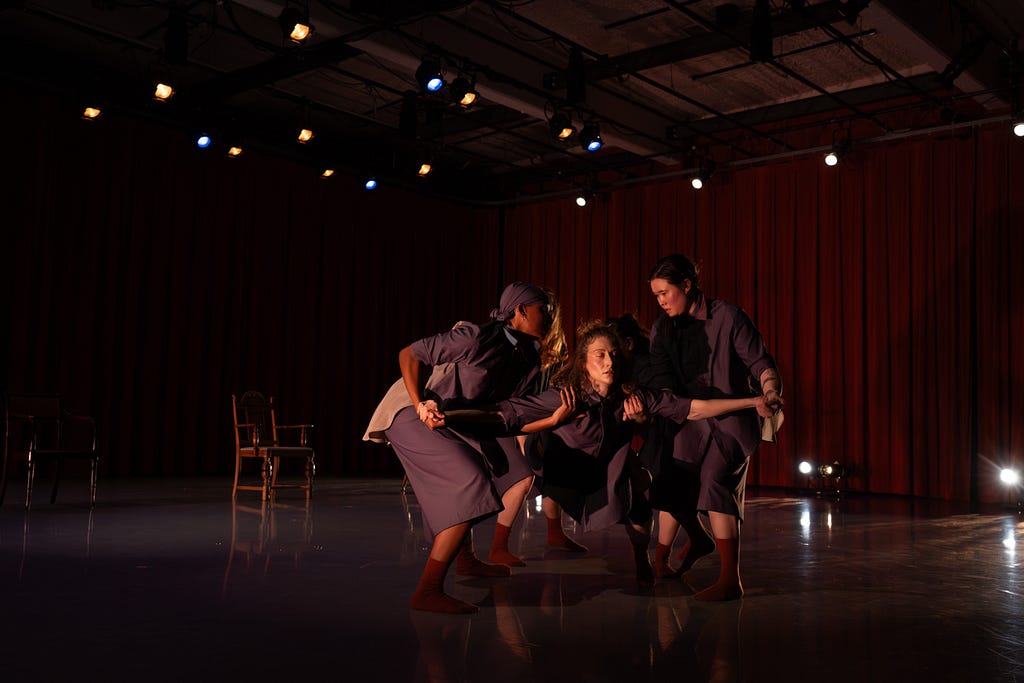
Hypnagogs, a work choreographed by Tracey Lindsay Chan, appeared somnolent while equally buoyant. This piece evoked a certain contemplation of what tethers the waking world to our resting mind or subconscious. And what was unequivocally distinguished about this piece was the almost archetypal relationship between the dancers and their props. The dancers entered the stage individually carrying stately, throne-like seating. Each chair seemed hand-picked, having certain similarities but each with its own exclusive detail. This in a way resembled the correlation of each performer, exquisite in their own right but varying in their movement qualities and magnitude just as each seat did. Chan’s costuming choice was equally impressive, created by Josue Villeda, the costumes were identical resembling private school uniforms slightly — lain with extra bits of fabric which coasted on the gusts of air generated by sharp, gestural, and often circular patterns of movement. While flying through the air or leaning against their chairs in an exhausted fashion, dancers’ eyes remained closed as if they were sleep walkers.
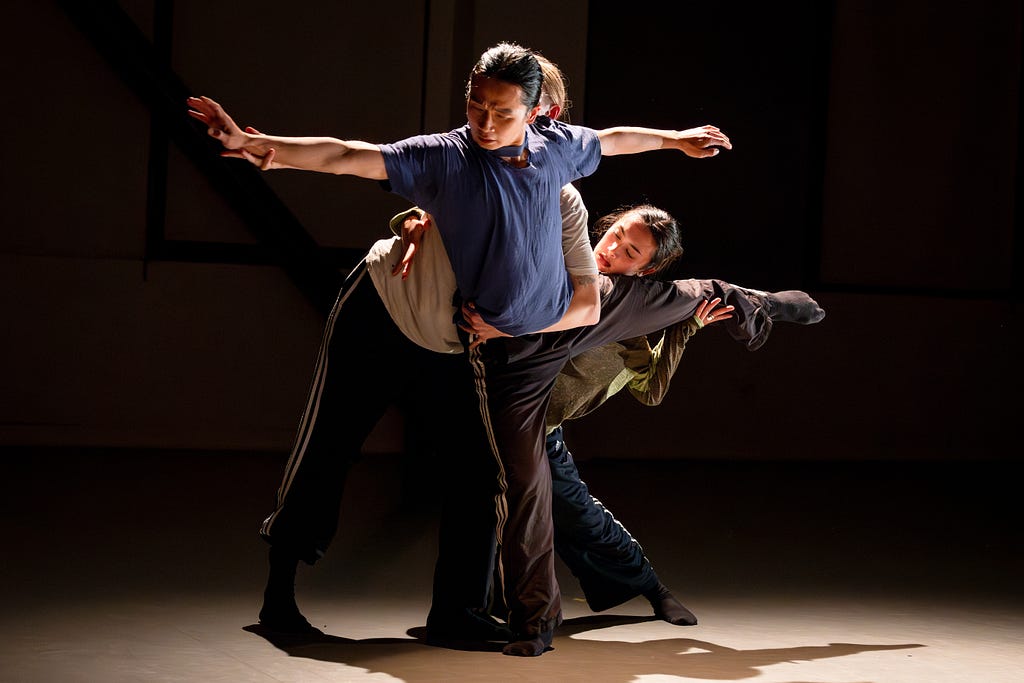
In a collaborative piece led by the choreographer, Alice Svetic, lighting was set low and attire was monochromatic. The audience was fully focused on the dancing in this piece named, Builders and rightly so. A spotlight frequently highlighted the dancers and this work was ripe with physical tensions and orchestrated weight exchanges between performers, who often danced in pairs. There was both a literal and emotional emphasis on the exuviation of layers no longer needed for progress.
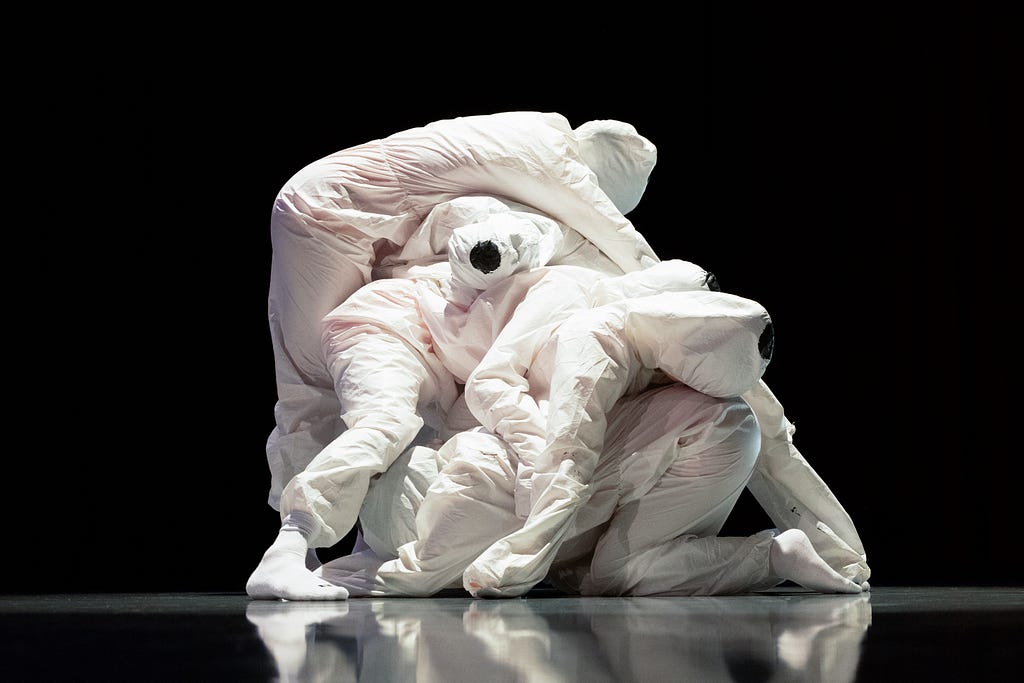
And In Kat Lin’s piece, they see me rollin, movement was created in partnership with her four other dancers. This piece was hilarious. The performers rolled out like tiny insects from the sides of the stage and from underneath the curtain. They were dressed in sterile, white suits fastened tightly to their faces as though they handled hazardous materials. Instead, for some of the time, they were grouped together at diversified levels and as a group took turns shifting their gaze to different sections of the audience. With their eyes peeled open and their heads cocked inquisitively, they wiggled, they stared deeply into our eyes, and we were utterly entertained. The dancers each took turns seizing the audience’s attention with their full-bodied movement accompanied by a captivating exit. This was typically demonstrated by a full sprint from the floor, across the stage, and behind the curtain. Towards the piece’s end, dancers pulled off their “hazmat” suits giving way to vibrant red unitards, criss-crossed at the back and thigh length. The tone was jovial and light but the most striking aspect of this piece was its end. As the dancers raced off stage, one dancer, Abigail Hinson remained. She lay on the floor writhing about as if live electricity pulsed throughout her body. Her arms and legs jolted around and her body flopped back and forth and for a fleeting moment things were not so funny. We were compelled to peer beneath the surface, to dig.
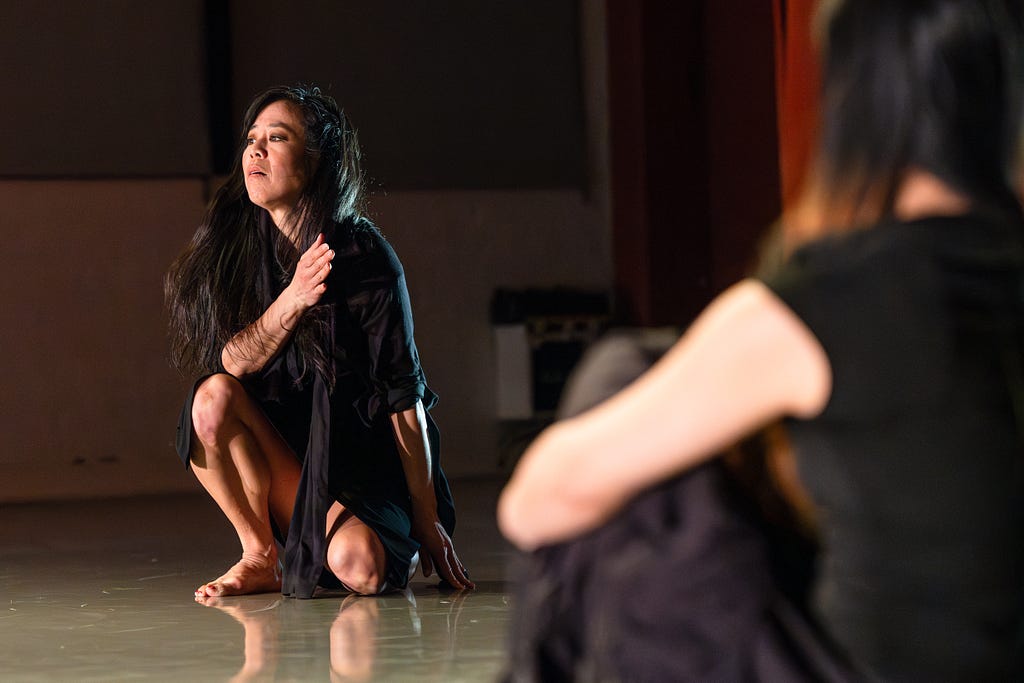
A stunning trio created by Eli Shi entitled, Run all the way home featuring writings by Anna Zheng was reminiscent of a childhood bedtime story. The narrator often depicted by whichever dancer was in motion was an unfolding story of three generations of women navigating their involuted relationship with each other. The dancers were dressed in a delicately feminine way and in all black. The ingenue, played by Hiroka Nagai, was precisely what you might expect, investigative, hopeful, and defiant. Her mother, danced by Norman Fong, offered a warmth and a certain openness but was aggrieved by the turns of life. And the grandmother, held behind a hard shell of tradition proffered a distant love — this love was the kind you hold for a person that is no longer recognizable and yet, there is love. The piece featured live accompaniment by Sebastian Blue which tendered even deeper emotional engagement from the audience as the dancers enveloped space and manipulated it at their will, until it had transformed.
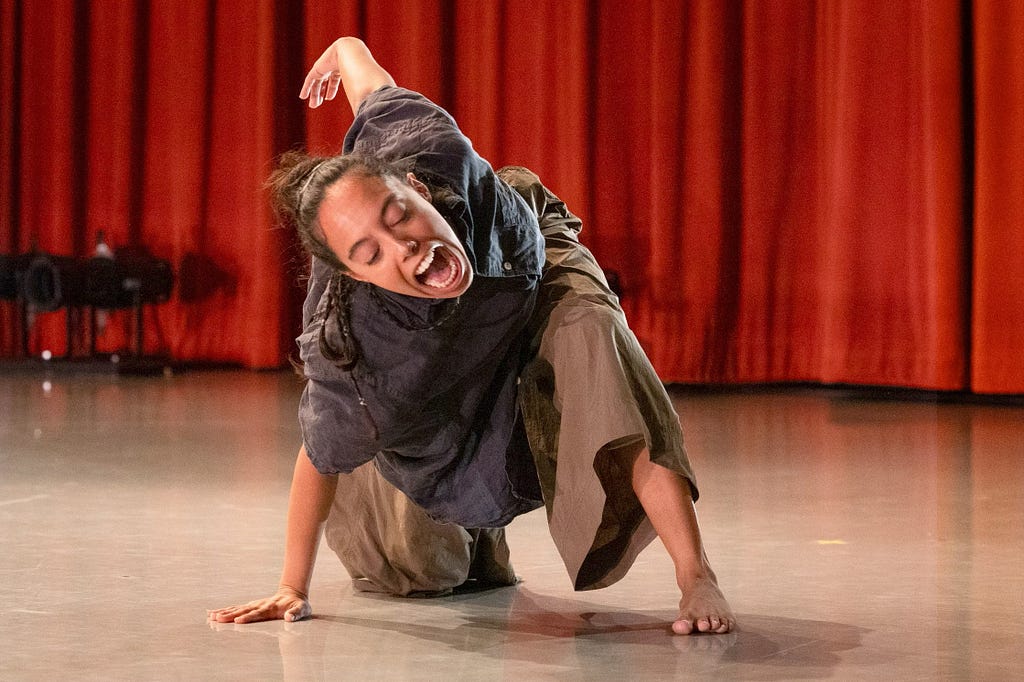
Flood the Garden, the final piece created by Gabby Wei in collaboration with her dancers was a riveting piece, the kind that gives you reason for pause. A piece that you may need an extra minute to process, decrypt all of the stimulating layers, and sit with for a moment. The costumes lended balance with warm colors and nudes with a neutral fitting. And there was a contrast of flailing bodies on a strict diagonal in the form of mini solos which at some point became an undulating amoeba with the dancers affixed to one another. Each performer maintained their independence while shifting together in the collective. And when the last applause was subdued, I took a moment to peer at the program to realize the introduction for this piece included a poem:
the garden is flooded
washed up washed away
seeds are no longer thirsty
some of us can no longer stand up straight
and my life is rolling and unfurling
alongside me
Somehow, all of a sudden, it felt clear.
If you are able, I highly encourage you to catch the next Pilot production. This show should not be missed!
Ki’ Shae Qetlah is a SF based, multi-disciplinary artist and educator most prominently focused in performance, culinary, and literary arts. Qetlah is particularly driven in non profit and community based work and the emphasis of dance as such a valuable gift to our society.
ODC’s PILOT 75 Digs Into Exciting Choreographic Voices was originally published in ODC.dance.stories on Medium, where people are continuing the conversation by highlighting and responding to this story.