
Nkechi Njaka
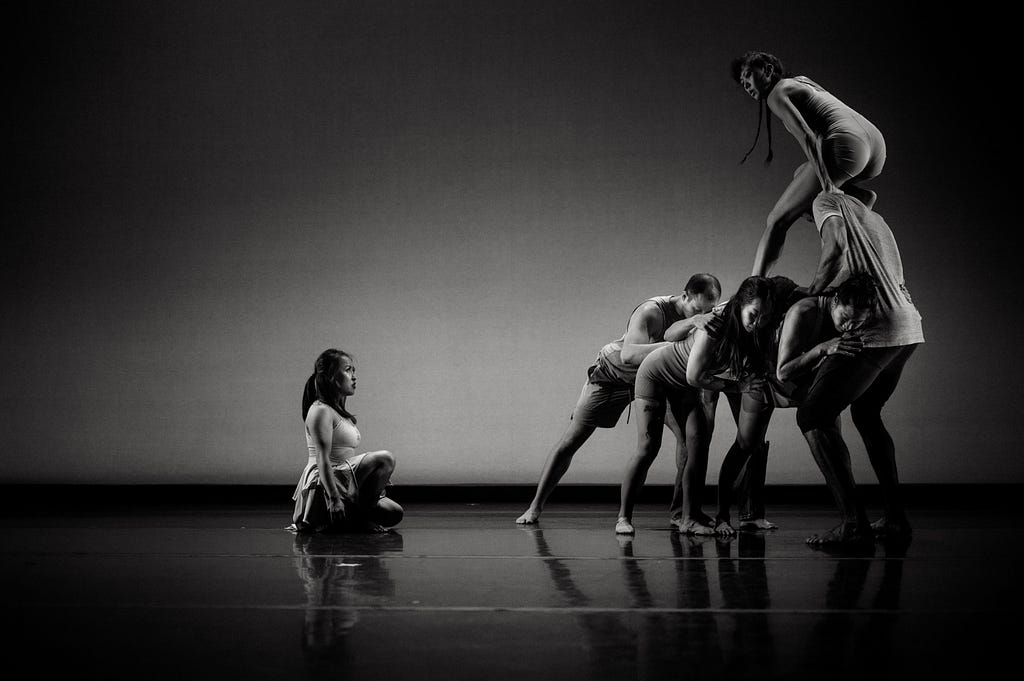
The BIPOC Acro Collective Care Ecosystem presented TRIGGERED at ODC Theater in San Francisco from October 24–26, 2025. Under the vision of artistic director Veronica Blair, the inaugural Take Power, Make Power (TPMP) performance residency concluded with an anticipated acrobatic performance. This work was made possible through seven months of mentorship and the support of ODC as a space that values experimentation, rigor, and celebrates all bodies.
Historically, BIPOC artists have faced systemic barriers in acrobatics, aerial arts, and circus. Whether from limited access to training and funding or the legacy of exploitation interwoven in the American circus traditions. For Black, Indigenous, and Brown performers, these disciplines have often been spaces of both physical rigor and social marginalization. TRIGGERED gave space for BIPOC acrobats to lead and be included in a powerful expression of liberation.
What happens when residencies are intentionally created for BIPOC artists to develop their skills, learn from mentors, and are given the opportunity to produce and present work?

TRIGGERED explored the raw, untamed force of racialized anger through partner acrobatics, dance, and physical theater. Each performer embodied anger’s many faces (heat, volatility, protection, destruction, defense, abuse) and its potential to alchemize. The show explored anger’s range and moved from the quiet rumblings of irritation to the explosive release of rage. This trajectory allowed the audience to reflect where anger lives in the body, how it moves through relationships and communities, and what becomes possible when we allow ourselves to sit with it long enough to listen. It also allowed us to ask what becomes true for the collective when these feelings are shared and metabolized through others.
Acrobatic performance is distinct from, and deeply intertwined with, other forms of movement like aerial dance, dance with acrobatic elements, and circus performance. Trust, timing, and relational awareness are essential. Each lift or catch carries a weight beyond the physical. In acro, specifically, the body is the primary instrument.
In this performance, the lifts were striking. There were moments of pure trust and suspended strength as the group held and supported one another. A particularly striking image emerged when the ensemble formed a three-high stack. This formation of three bodies balancing vertically to create three distinct levels of human architecture was incredible to see. Precarious and powerful, the stack seemed to depict the collective support of the performers collaborating together and what truly lives at the heart of the work.

Another unforgettable moment was a duet that evoked the complexities of domestic tension or intimate partnership. One dancer, grounded and stoic, stiff at the end of the stage as another repeatedly ran toward him, colliding into his torso, clinging to his chest before sliding down to the floor. Each time she gathered herself and returned, the cycle repeated — five times, maybe more. Each attempt amplified an emotional voltage between them within the scene. The repetition made the invisible patterns of longing, resistance, and endurance that live in the body clear. And somehow it transformed relational struggle into an embodied score that was beautiful to watch.
TRIGGERED centers BIPOC bodies, histories, and imaginations. Partner acrobatics anchored the work, demanding the courage to fall and be caught, to release and rise again. Aerial-inspired sequences allowed the performers to inhabit space expansively, to suspend with the present emotional material of the work. And while the work carried elements of theatricality, it never lost sight of acrobatics as a tool for both physical and social alchemy. It was fascinating to see acrobatics utilized as a language that articulated trust, risk, and collective power in a way that words alone often cannot capture.
The entire TPMP cohort included: Alyssa Bigbee, Raymond Diamond, Theresa Edge, Landyn Endo, Jordan Garcia, Rosemary Le, Eric McKeethen, Ori Quesada, Serena Tang, and Marissa Wong. Together, they all transformed anger into art, risk into embodied practice, and acrobatics into powerful storytelling.
Nkechi Deanna Njaka (she/her) is a practice-based creative researcher, choreography artist, public speaker and culture writer whose work explores the intersection of embodied presence, somatic research, well-being, science, art, and social practice. She is the founder of The Compass, NDN lifestyle studio, and co-founder of the sleep app DreamWell, emphasizing mindfulness and creativity as essential for individual and global well-being.
In “TRIGGERED” Trust Falls And Leaps was originally published in ODC.dance.stories on Medium, where people are continuing the conversation by highlighting and responding to this story.