
Garth Grimball
Smuin Contemporary Ballet cap off an exciting 2025–2026 season this month. The Future Forward program opened in San Francisco, moved to Walnut Creek last weekend before closing in Mountain View on May 14–17.
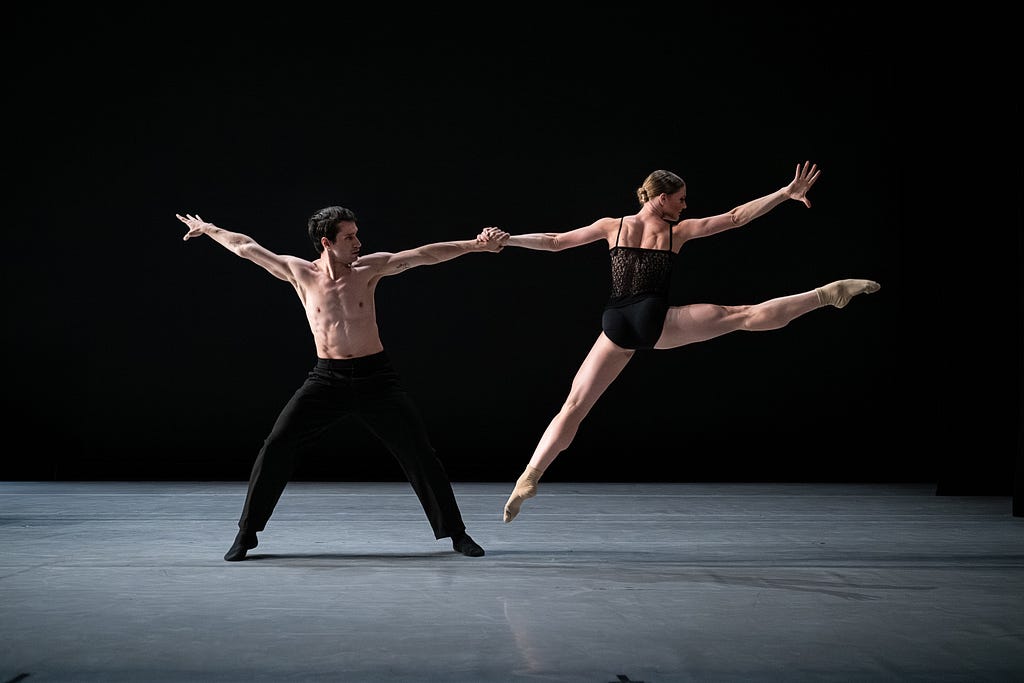
The program opens and closes with solidly constructed non-narrative ballets. Katarzyna Skarpetowska’s Sextette (2021) is a sharp, lively interpretation of Bach. Artistic director Amy Seiwert’s world premiere Still Falling is a continuation of her 2007 Falling Up, both set to Brahms.
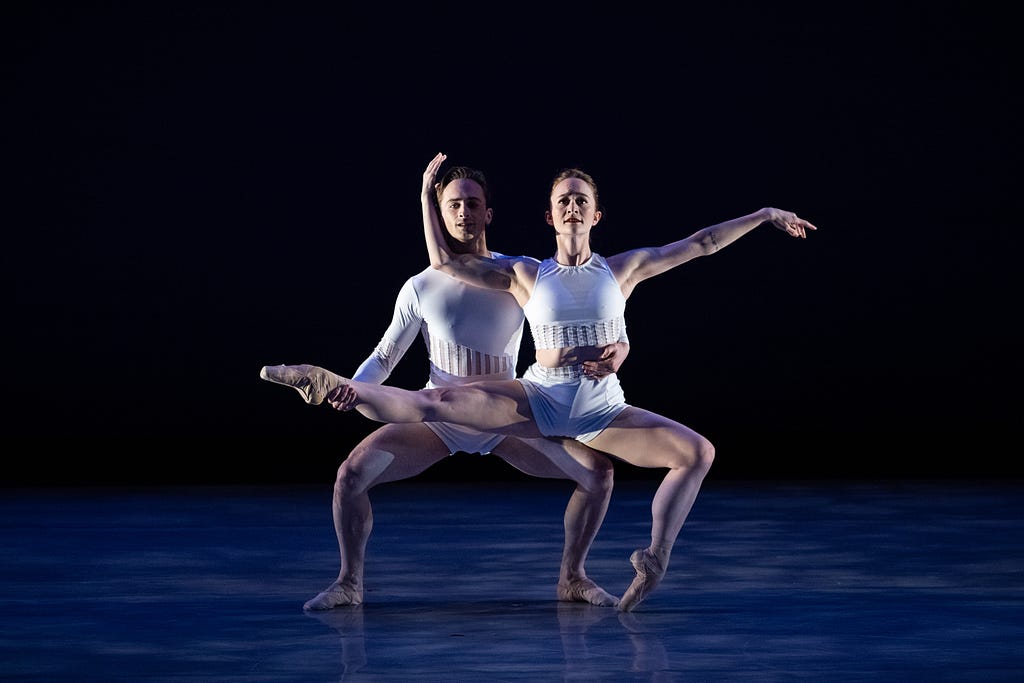
Sextette shares some DNA with Paul Taylor ballets, namely Airs. Skarpetowska’s choreography has a crystalline precision. Bach’s rhythmic variations are met with a series of canons, often with jeté and chaînés. Like Taylor, Skarpetowska pushes limbs to reach beyond the energetic kinesphere, allongé to the max. The dancers performed assuredly and kept the energy bouncing through the fast-paced shifts and turns.
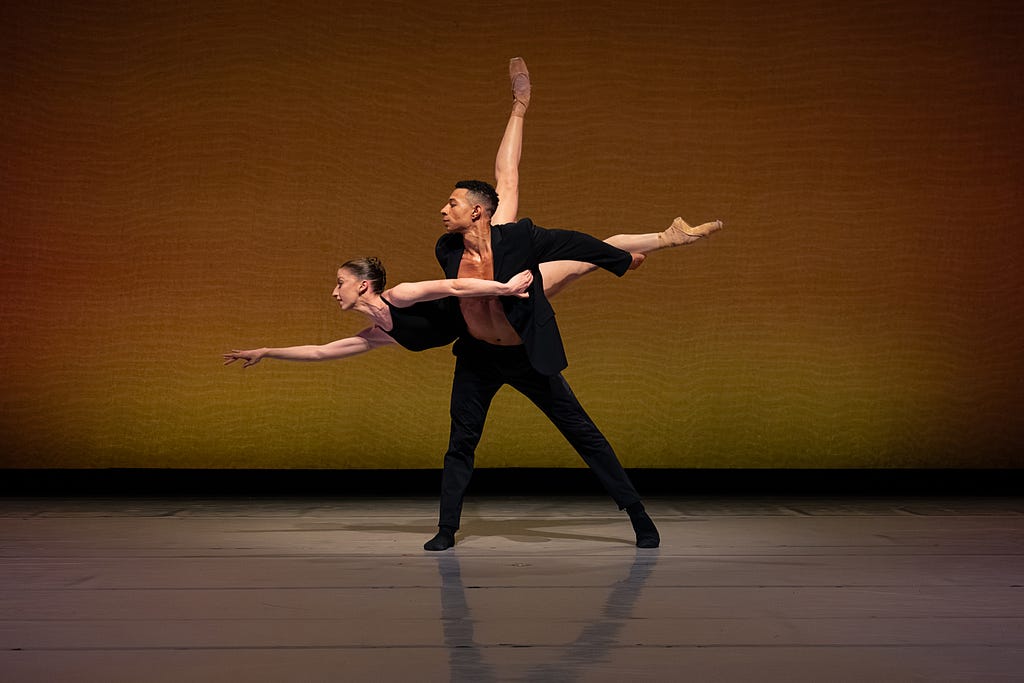
Still Falling brought the whole company together and it was affecting to see this ensemble dance in a new work by the new artistic director. Seiwert’s choreography has the dancers dancing for each other and for the audience. The dancers frequently ran into a line facing downstage, one behind another, before breaking out into partnering. Partners twisted and untwisted around each other. Coupled promenades created a sense of scanning, like each pair was taking in as much as performing for. Counterpoints of lines and leaps resolved into tableau. The ensemble swayed and alighted into a unison phrase, dancing together.
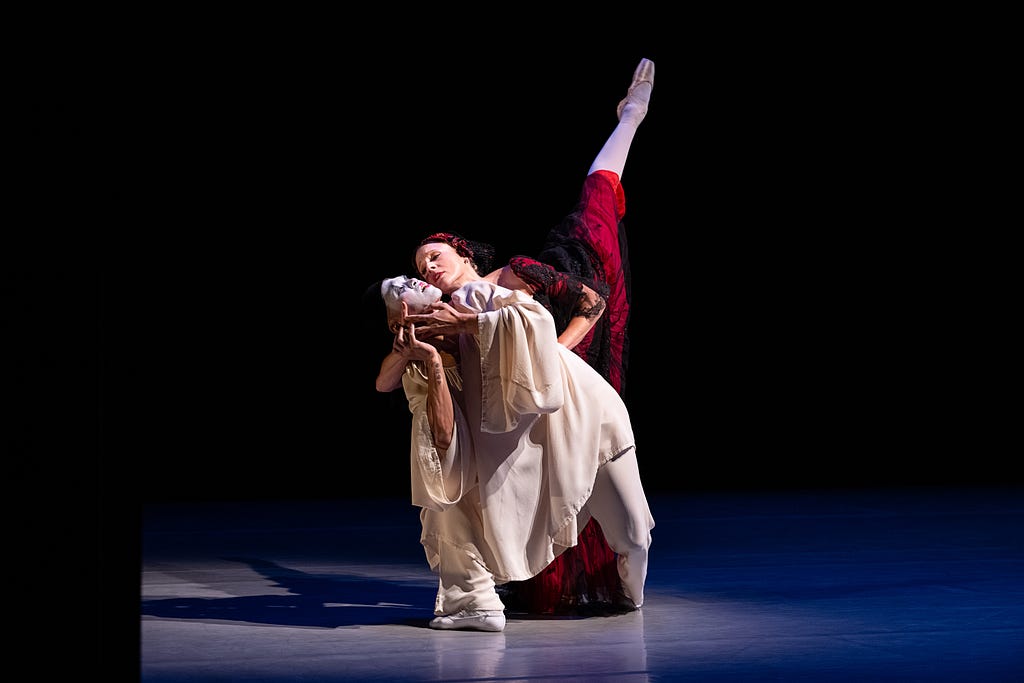
Michael Smuin’s Hearts (Les Ballets des coeurs), from 1983, was his final ballet for SF Ballet. Hearts Suite is an excerpt of the ballet for two dancers, solos and pas de deux set to the music of Edith Piaf. Piaf is not only a signifier of France, but a voice of a nation, in that she is a beacon of francophone culture, and her voice is so emotionally deep and wide that it sounds like it could fit populations inside of it. Matching that bombast is a tall order. On May 2, Yuri Rogers performed the mime (more of a Baptiste from Les enfants du paradis than Marcel Marceau), and Claire Buehler was the femme triste amoureuse. Both did the best they could with the dated choreography. Smuin had the female role look down throughout most of her dancing, which can evoke sadness, but was frustrating in its obfuscation of what Buehler might have brought to the role could she look up and out more. In the mime role is technically demanding choreography, and Rogers gave a strong performance in the many leaps and pique balances. Theirs is a duet of touching but not connecting. While their love story was committed to by the dancers, Smuin’s choreography does not meet the resonance of Piaf.
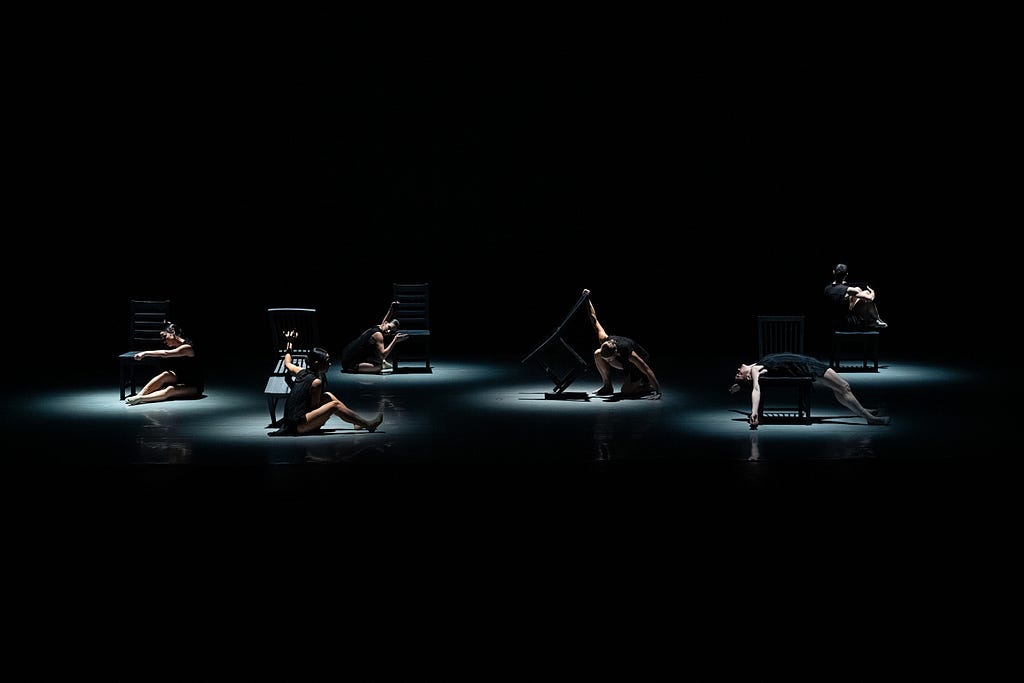
The most provocative work in the program was Jane Doe by Andi Schermoly. Five women dressed in black sat on a row of black chairs upstage. Since Fosse filmed “Mein herr” in Cabaret, the slinky woman on stiff chair has populated music video and concert choreographies, usually to communicate sex appeal. These women were still, their relationship to being seen unknown until five men entered. Each man paired off with a woman and slowly manipulated her limbs and posture. The contact was more like a photographer directing a subject than an inspection or confrontation. The women melted out of the chairs and Jane Doe opened out into a series of destabilizing scenes. From pas de deux to unison choreography to solos, Schermoly found ways to serrate the familiar. The structure of the ballet was conventional but the tone upended feelings of convention. Jim French’s lighting design makes the dancers seem removed from each other even when they are close together. Chris Dunn’s costumes allowed for full-bodied dancing and played on the silhouettes of the “little black dress” and the men’s suit. Schermoly’s direction delivered performance qualities I have not seen before in the company. Each dancer excelled at communicating specificity in personhood but universality in actions.
Towards the end the men take the stage in long skirts evocative of boxing shorts. They smile and playfully shift. They seem happy, kind. The women join them. The men put on pink boxing gloves and cartoonishly, no-contact knock the women down, like contemporary dance Punch and Judy. They men exit in slow motion. The women are left to themselves.
Of the many ballets I have seen that involve violence against women, the vast majority are by men and responded to the subject matter as a choreographic challenge (John Neumeier’s A Streetcar Named Desire being the most egregious example). Jane Doe explored subjugation as a social reality. It wasn’t egregious or pedantic. It was nuanced and intelligent.
Garth Grimball is a writer and dancer based in Oakland, CA. He is a contributor to Fjord Review, SF Examiner and Dance Media. He is the editor of ODC Dance Stories.
Smuin Contemporary Ballet Ends The Season Strong was originally published in ODC.dance.stories on Medium, where people are continuing the conversation by highlighting and responding to this story.