
Garth Grimball
Bellwether Dance Project, led by artistic director Amy Foley, shared its second season at ODC Theater on September 14–16. For years Foley’s dancing has been integral to many of the Bay Area’s modern dance companies: Garrett+Moulton, ODC, Robert Moses’ Kin, Margaret Jenkins. As a choreographer her voice develops in big movement dances with Bellwether Dance Project.
Season two opens with Aurora Sad Magic, a septet inspired an Alaskan folktale “that imagines the Aurora Borealis as the souls of our lost loved ones.” Boreal colors are projected on the backdrop. The seven dancers, dressed in similar hues, sit on the floor, look up and scoot around. A motif of spoked arms windmilling emerges and continues throughout the work. Roseann Baker, Iva Dixson, Claire Fisher, Caitlin Hicks, Olivia Caldeira Holston, Elena Martins and Julian Witt are matched in their abilities to eat up stage space and shift from deep lunges to fast gestures. Dixson is a stand out in her liquid spine and precision. Aurora Sad Magic feels big but a bit diluted. Its concept frays as the movement vocabulary becomes more modern dance moves and less specific.
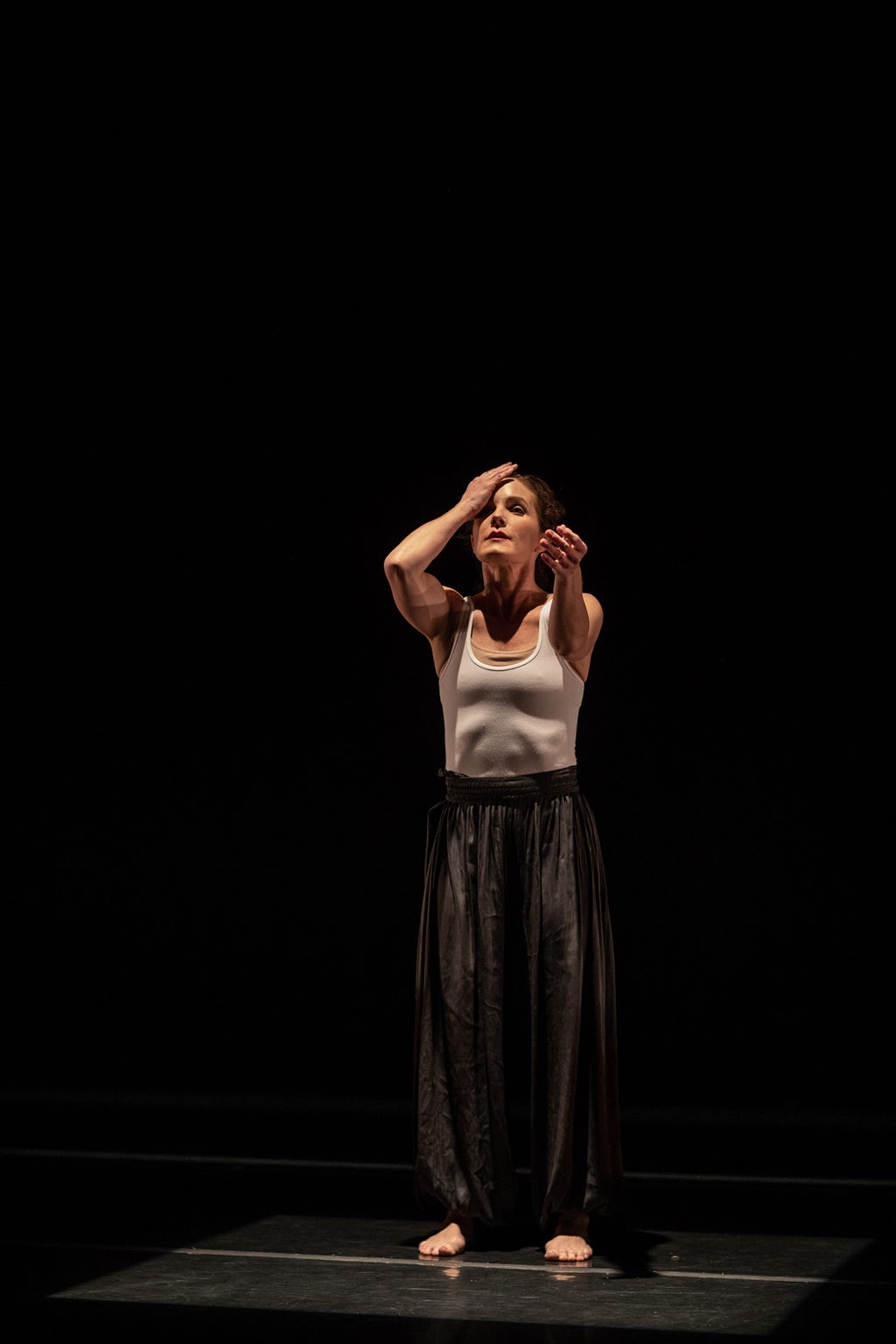
Amy Foley is a true performer and dancer. Her onstage presence equals her technical skill. She is one of my favorite dancers to watch and her solo What’s the Matter showcases her power of holding space and then releasing the energy out through focus, gesture and traveling. Melissa Boucher accompanies on the piano with a Chopin nocturne. Foley reaches and swipes and pats herself on the back. The dance feels like an internal monologue in which ideas don’t float past your awareness but grow together like a vine reaching for the sun.
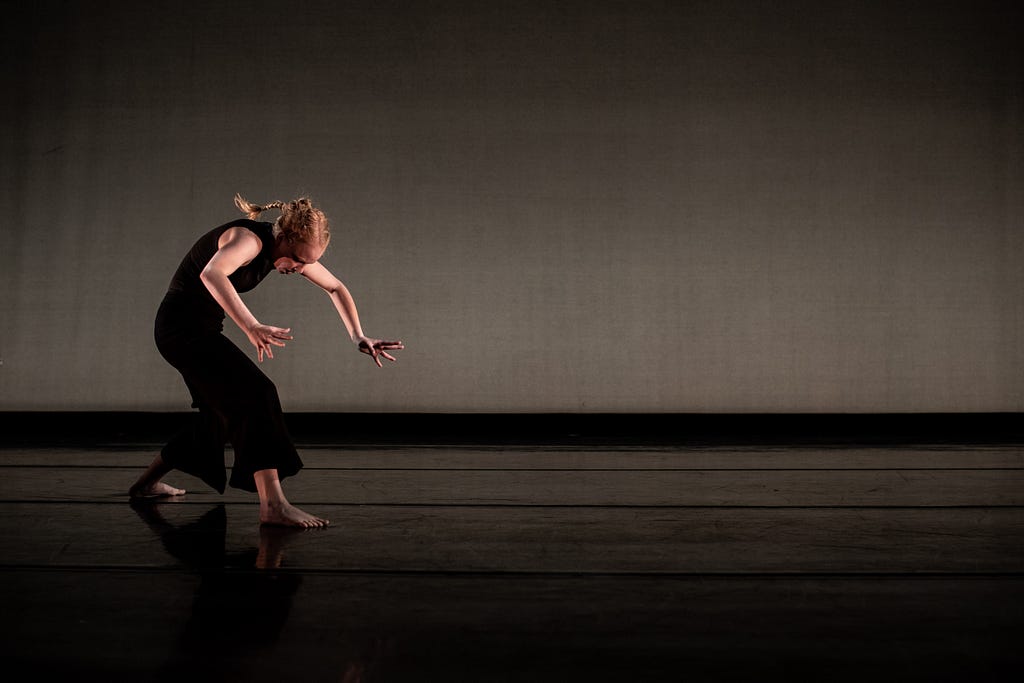
The program closes with Let Slip the Witches from 2019. The Aurora cast, minus Baker, returns for another big dancing, big moving dance. Too many choreographers rely on running as a transition on and off stage. Thankfully Foley is not one of them. This dance is choreographed with entrances and exits, disappearing and appearing in mind. Clad in black with black diagonal stripes painted across their faces, the dancers stand on stage under gobo lights that evoke runes. The dancers chant “witch” and its synonyms. Speaking on stage is a unique skill that takes training just like dancing. The speaking needs more power in delivery to match the dancing. The vocabulary juxtaposes twitchy, angular forms with sweeping wends and winds. A rhythm of claps, slaps and pats heightens the sense of collective power. One dancer will start and the others will join, sometimes polyrhythms emerge. Let Slip the Witches is a dance for dancers, a dance that relishes what dancers can do.
Bellwether Dance Project Moves Big was originally published in ODC.dance.stories on Medium, where people are continuing the conversation by highlighting and responding to this story.