
Garth Grimball
Dance, perhaps one of the professions safest from the tentacles of AI, is very interested in AI. Productions from Bay Area contemporary, hip hop, and ballet companies alike have been exploring the expanse and authority of an unchecked algorithmic tech via dystopic tones over the past year. Kinetech Arts, the SF-based technology and dance performance company, has been making performances inspired by AI since 2018, and their newest work delivers a truly mesmeric experience.
Palladium is both a shiny, silvery-white metal used in jewelry and electronic devices, and the sacred statue of Athena from Greek mythology, said to protect and ensure prosperity for those who possessed it. Palladium, which ran Nov 1–3 at the ODC Annex, was an immersive installation that triumphed in its use of hardware and software to agitate the increasingly limited space between embodiment and disembodiment.
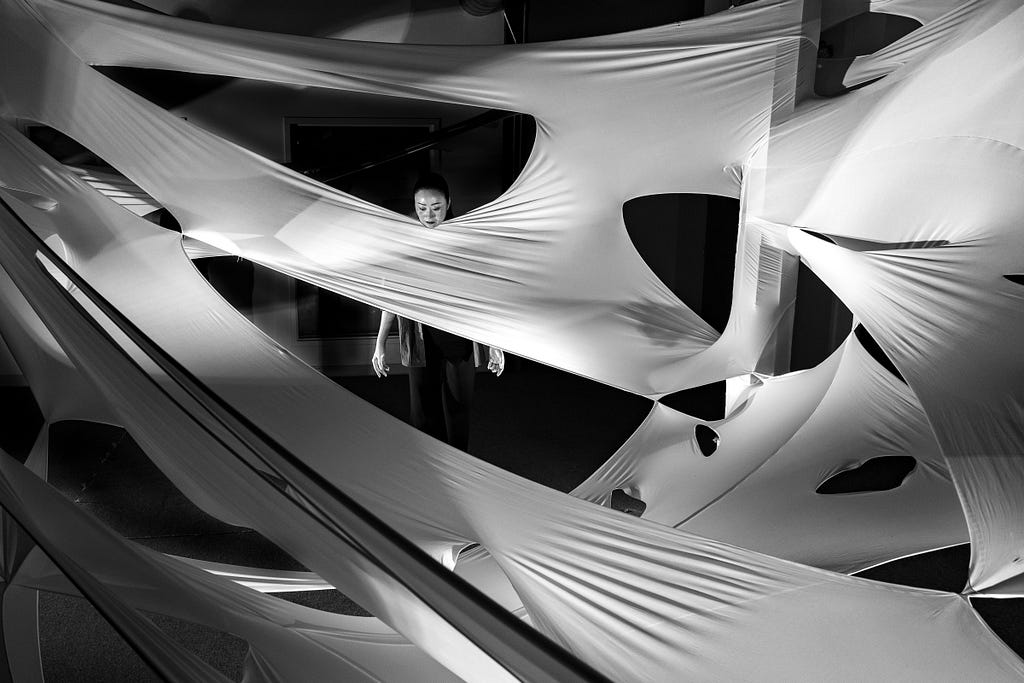
The first floor of the ODC Annex includes several offices, a dance studio, a kitchen, and open spaces big enough to comfortably park cars. Kinetech transformed the venue; Stella Zhang designed two evocative installations. A web of intersecting fabric evoked lunar waves through which performers and audience waded. A corner covered in mylar blinked between a stable of digital detritus and a glam rock dreamscape. At first glance the kitchen offered no surprises, but zoom out and the familiar surfaces and appliances were lighted as if under interrogation.
Palladium’s actions are impossible to intake in totality. Like the internet, everything is concurrent and details obfuscate and emerge depending on your entry point. Directors Daiane Lopes da Silva and Weidong Yang expertly balanced the user experience so that the individual moments were not in competition with each other.
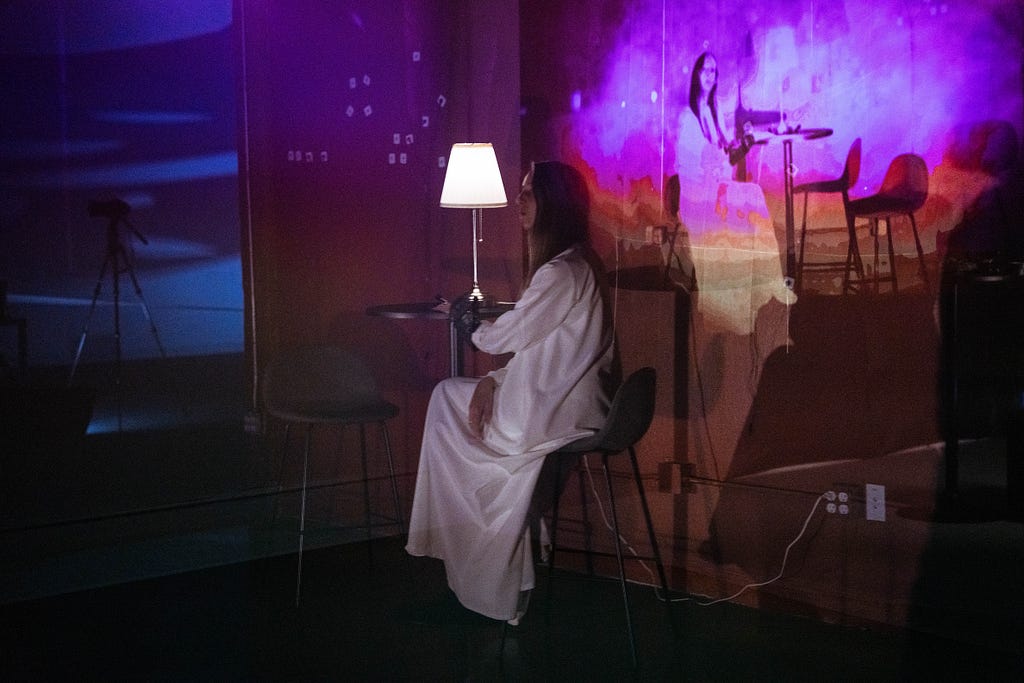
Avital Meshi opened the performance seated at a high-top table, dressed in a diaphanous tunic. Audience members could choose to sit with her and ask questions. The questions could be responded to be either Meshi or a chatbot — Meshi had a Bluetooth earbud in that was connected to a panel on her wrist. Whether it was Meshi or AI responding, Meshi kept her voice steady in the detached but warm tone of Siri.
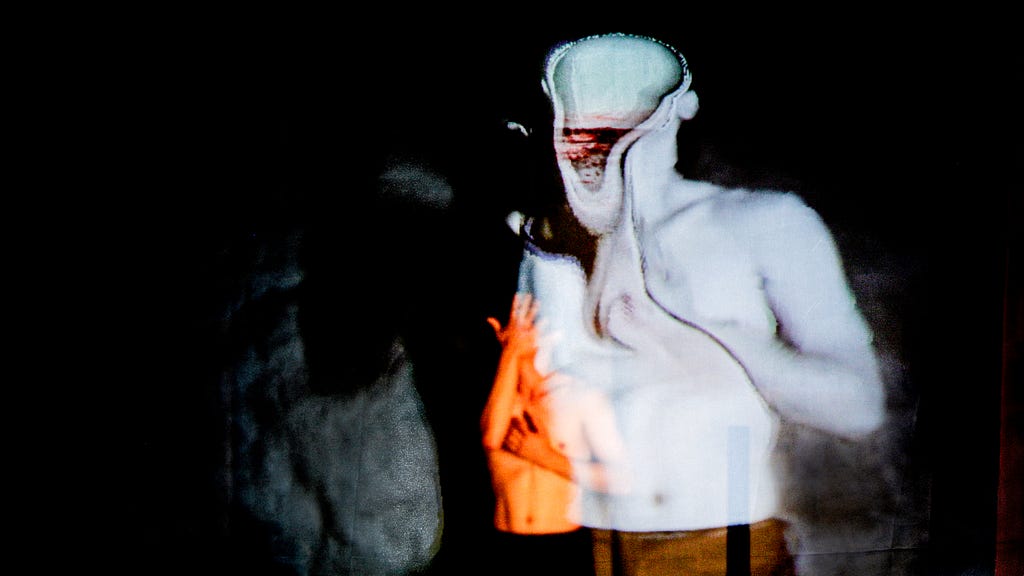
Raven Bautista and Amy Wasielewski each danced solos (I saw Bautista) behind a transparent veil in a room titled “Time Folding.” Bautista paced and undulated behind the veil and his projection on it would leave glitchy trails. As the solo progressed I went from looking through to see the person to looking at his image transmuting into inky splotches. The bewitching visual was broken when he walked into the veil, not fully crossing through to be seen without a filter, but reclaiming three-dimensionality when the fabric folded around his form.
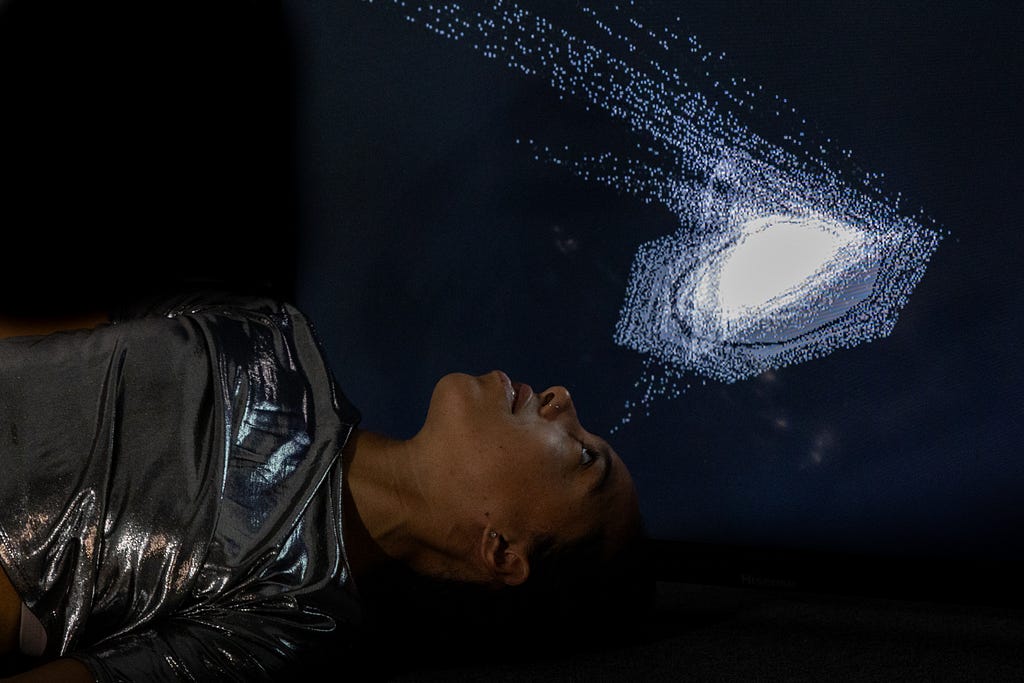
In two adjoining offices — titled “Void” and “Void Viewing” — were a perfect corporeal metaphor for the sublimation of variety to convenience that is foundational to the attention economy. In one office empty of any furniture save a monitor displaying a digital mural and an orbital camera, a dancer (Essi Salonen or Giovana Sales, at difference times) performed. The door to that office was closed. A small transom window was the only option to see the performance unmediated. In the adjoining office was a large sofa set in front of a television broadcasting the solo performance. So, a viewer can either choose to stand, potentially disrupting the flow of traffic, hopefully being considerate of sharing the vantage point with others, in order to see the solo with your own eyes, making your own choice as to what to focus on, or, you can sit on cushy couch and see what the camera allows. Do you choose comfort or autonomy?
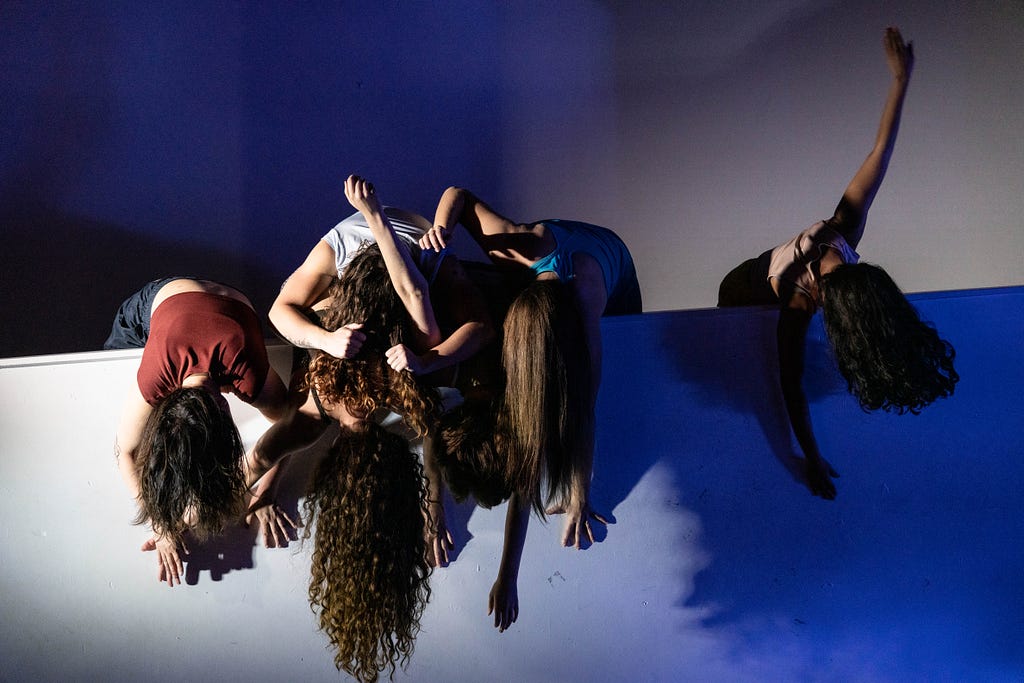
Moments of group dancing assembled and dissolved throughout the space. In one instance six dancers folded over a railing and swayed back and forth, their hair like weeping willows in a breeze. If you turned away, and your gaze made it to the other side of the venue, the choreography was being livestream projected, but in a sepia tone. Each instance already part of a digital dust, a virtual catalogue of human creativity.
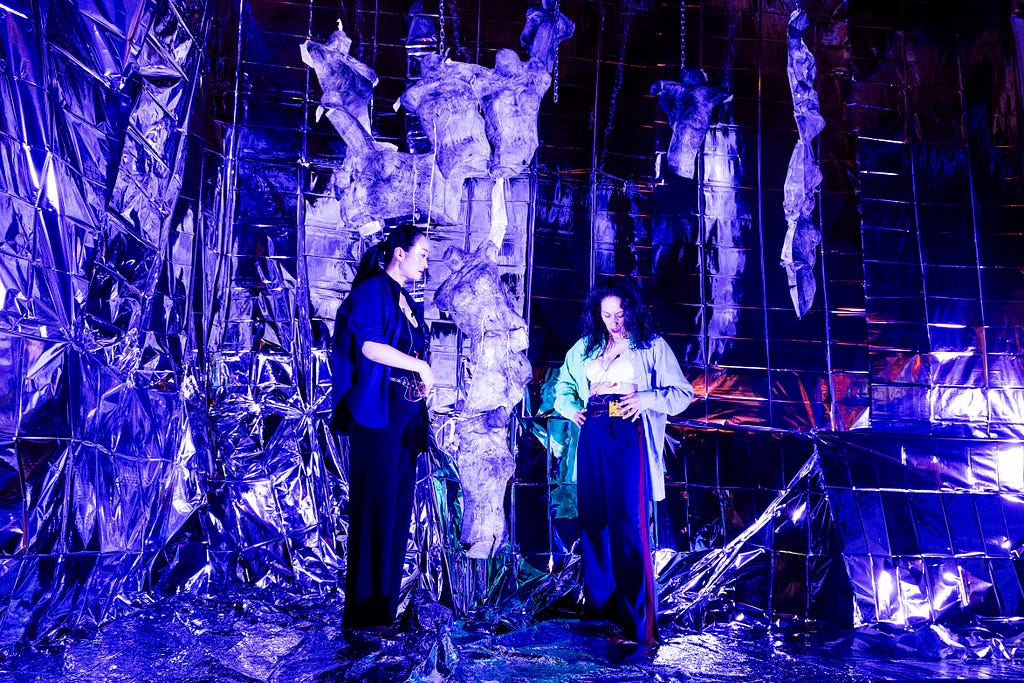
Lopes da Silva and Feng Ye danced an energetic, technical duet in front of the reflective installation. They spun, crouched, reached, and threw their long limbs into the space, all the while wearing heart monitors. When the choreography reached its fever pitch the dancers stopped and stared at each other. The sound score by Adrian Montufor and Hannah Young ceased. The rapid heartbeats of the duo pulsed out of the speakers. In the time it took for Lopes da Silva and Feng to calm their breathing so their hearts beat in unison I felt a profound shift. The technology enabled closer proximity to their experience, to their humanity.
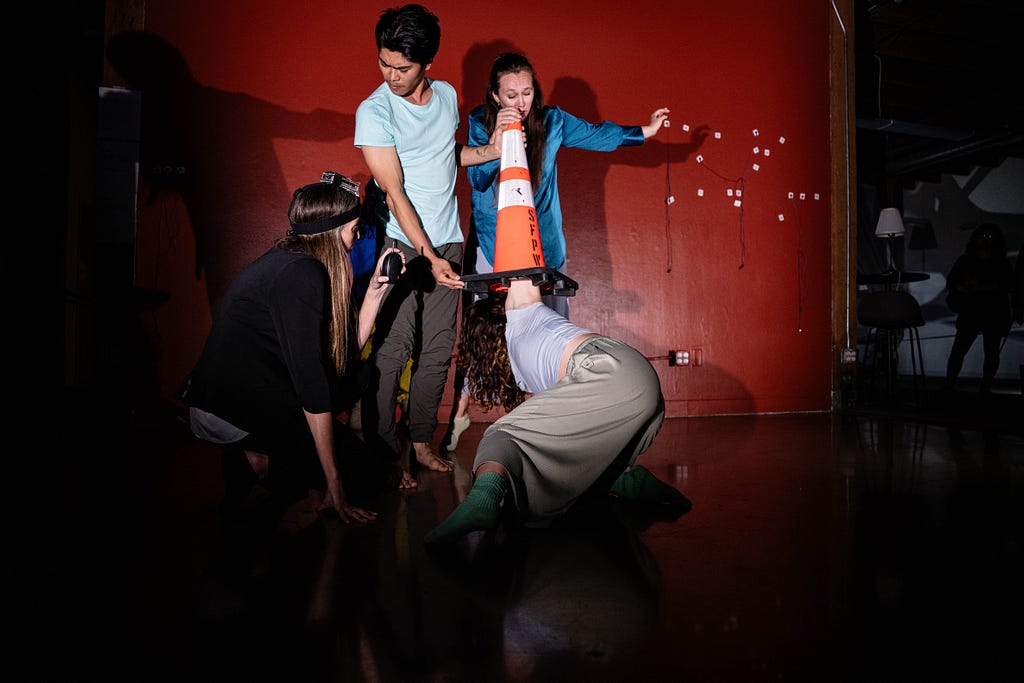
Meshi returned as Palladium ended. She wore pedestrian clothes and a camera on top of her head like a crown. A new voice spoke into the space as dancers surrounded her. “Shake off the night’s whispers from your shoulders as if they were autumn leaves,” the voice instructed. The dancers obeyed in kind. Or, “The vibrant colors or motion suggest a gathering or event,” the voice described. The camera on Meshi’s head was capturing images that were responded to by AI and AI was giving prompts from which the dancers made images. It was like an ouroboros of authorship.
Palladium was provocative and intelligently rendered. The best provocations produce more questions than answers. Kinetech Arts excelled at leading the audience to questions but never providing clear answers. I left Palladium questioning my own perspectives, feeling deeply human.
Garth Grimball is a dance writer and artist based in Oakland, CA. He is a contributor to SF Examiner and Dance Media. He is the editor of ODC’s Dance Stories.
Kinetech Arts & AI Question Autonomy in “Palladium” was originally published in ODC.dance.stories on Medium, where people are continuing the conversation by highlighting and responding to this story.