
Nkechi Njaka
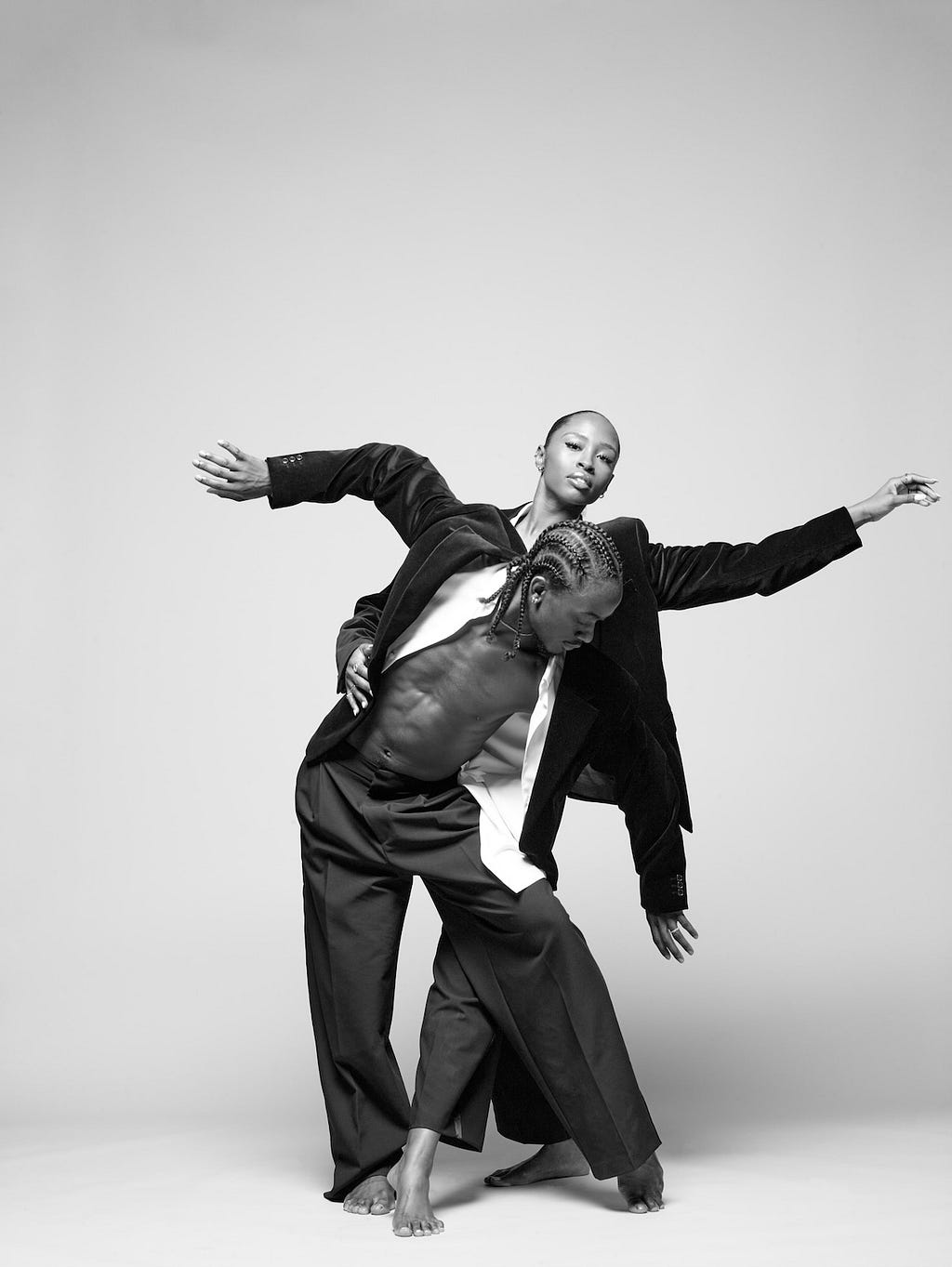
In February 2026, A.I.M by Kyle Abraham made its Cal Performances debut at Zellerbach Hall, presented by Cal Performances on the campus of the University of California, Berkeley. The evening offered a sweeping collection of choreographer Kyle Abraham’s evolving artistic language. It was beautiful and exacting at times, musically attuned, and grounded in the textures of the Black and queer lived experience, also within a historical context.
The program unfolded in a deliberate arc, opening with the Bay Area premiere of 2×4 (2025), moving into If We Were a Love Song (2021), concluding the evening with The Gettin’ (2014). It was special to have each set performed alongside live musicians who remained on stage with the dancers, creating a cohesion between all artists. A combination of baritone saxophones, of a jazz rhythm section, and incredible vocalists — the works shared a vibrant dialogue between sound and movement. The musicians on stage included vocalists Charenée Wade and Crystal Monee Hall, Liany Mateo on bass, Luther S. Allison on piano, Otis Brown III on drums, and saxophonists Guy Dellecave and Thomas Giles, whose presence anchored the evening’s sonic landscape. We were able to see music through each of their bodies, and it created such an emotional texture to the evening. Music, in these performances, shaped tempo, created tension, and an emotional contour in real time. To be able to see the feeling of their notes through the expression of their bodies was a gift to the performance. They performed alongside the full company of A.I.M by Kyle Abraham dancers: Mykiah Goree, Alysia Johnson, Suzy Mondesir, Faith Joy Mondesire, Destin Morisset, William Okajima, Niya Smith, Olivia Wang, and Jayden Christian Williams, whose physical precision and emotional range carried the choreography across each work. Together, the ensemble functioned as a single organism, musicians and dancers sharing space in a way that made the collaboration feel immediate and alive.
2×4, created in collaboration with composer and saxophonist Shelley Washington, established the evening’s structural clarity. With the notes of the woodwinds paired with the stomping to set the rhythm, this piece seemed to revolve around the interplay of two baritone saxophones and four dancers. The dancers each wore bright colors. The score was shape forward and uplifting. Dancers carved sharp diagonals across the stage before jumping and leaping and folding into fluid spirals. The architecture of the piece felt almost sculptural; it was precise in its spatial design — yet it was wrapped with warmth. Abraham balanced mathematical and technical rigor with familiarity. As an opening piece, 2×4 invited the audience into a world of disciplined and rigorous movement that was beautiful, pleasing to watch and especially dynamic.
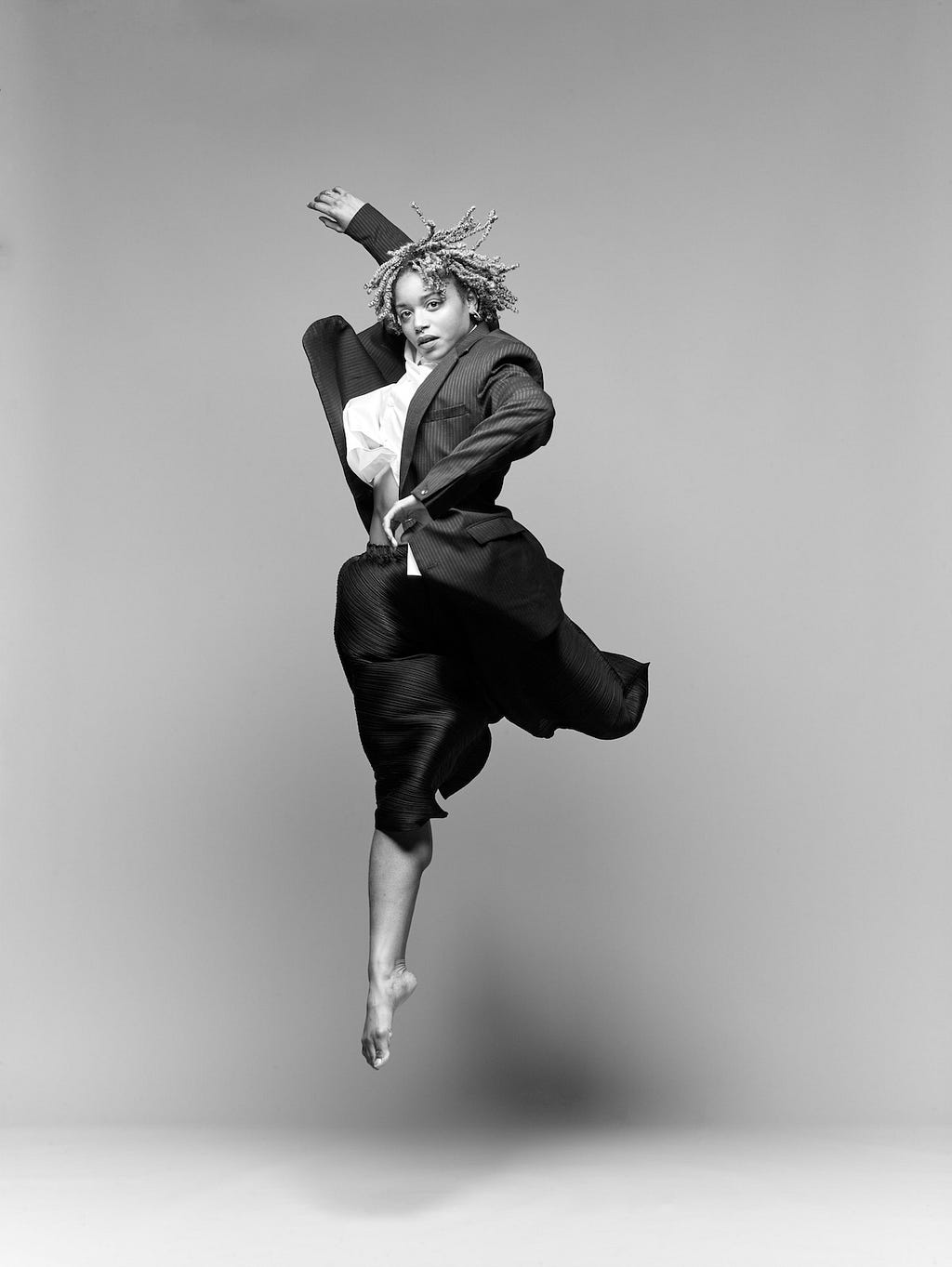
The tonal shift into If We Were a Love Song softened the edges, creating an emotional tone that wasn’t present in the first piece. Drawing inspiration from the music of Nina Simone, the work explored intimacy, vulnerability, and the fragile negotiations of connection, love and love lost. It started with an ensemble in the back, obscured and in the shadows. They moved as a group, beautifully. Mostly all the other dances in this section were solos, which paired with the heart wrenching love songs, suggests love lost or a loving relationship with self. There was one duet, and it unfolded with complexity — hands hovered before making contact, torsos inclined toward one another only to drift apart. Abraham’s choreographic vocabulary here felt distilled and lyrical. There were moments of pedestrian gesture intertwined with balletic extension and subtle social dance inflections, producing a language that felt both accessible and intricate. Rather than dramatizing romance, the piece lingered in ambiguity. Longing, some torture and hesitation coexisted, rendering love not as spectacle but as a tender, unfinished conversation.
The evening culminated in The Gettin’, which shifted the emotional trajectory of the evening by reintroducing urgency and collective charge. Where 2×4 foregrounded structural meaning and If We Were a Love Song invited inward reflection, the final work expanded outward into communal momentum. Set in dialogue with Max Roach’s Freedom Now Suite and arrangements by pianist Robert Glasper, the work pulsed with political resonance. The imagery projected as part of the set during the piece displayed images from the Civil Rights Movement, video from Jim Crow and Black Lives Matter movements. The ensemble moved across the stage, through loosely coiled formations that fractured and reassembled, evoking the histories of resistance and solidarity of Black America. Gestures and movements that referenced the Lindy Hop and other dances that were vital forms of cultural expression, joy in the face of racial oppression during the Jim Crow era rippled through the group like currents — arms swinging and legs flying before moving onto the next phrase. Abraham’s synthesis of that, contemporary technique, and social dance vocabularies felt especially potent here. And Abraham’s postmodern sensibility also felt very reflective of Black lived experience; a disjointedness and juxtaposition of levity and weight. The dancers embodied both restraint and release, demonstrating an embodied tension between survival of oppression and liberation.
Across the three works, Abraham’s choreographic voice emerged as both deeply personal and culturally literate. Stylistic hybridity read both as collage and also as coherence. By moving the program from architectural inquiry to intimate love portraits to a collective declaration, A.I.M shaped an arc that moved from form to feeling to force. The performances at Zellerbach Hall affirmed Abraham’s position as a leading figure in contemporary dance and as an artist who understands movement as archival, inquiry, and possibility all at once.
Nkechi Deanna Njaka (she/her) is a practice-based creative researcher, choreography artist, public speaker and culture writer whose work explores the intersection of embodied presence, somatic research, well-being, science, art, and social practice. She is the founder of The Compass, NDN lifestyle studio, and co-founder of the sleep app DreamWell, emphasizing mindfulness and creativity as essential for individual and global well-being.
Kyle Abraham Brings Architecture, Intimacy and Urgency was originally published in ODC.dance.stories on Medium, where people are continuing the conversation by highlighting and responding to this story.