
Garth Grimball
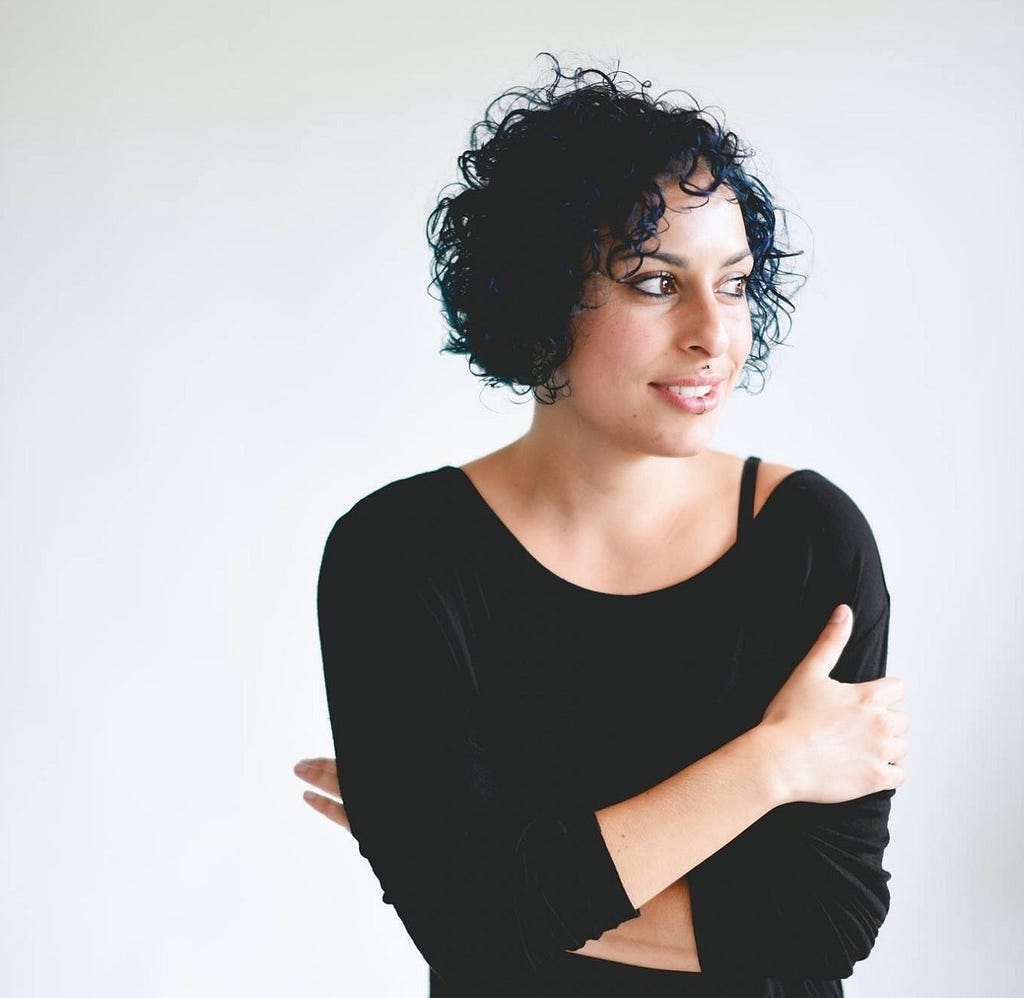
In January I had the pleasure of seeing several dance performances in NYC during the annual APAP conference with ODC Theater’s new Resident Curator, Zaquia Mahler Salinas, and was immediately taken with her insight, perspective and sense of humor. She will be co-curating the 2025 State of Play and presented performances in the 2026 Theater season. Before ODC Theater’s Spring Season kicks off tomorrow with Miguel Gutierrez, I asked Zaquia to share some of her thoughts on curation and recent inspiration.
What does curation mean to you? What are you seeking as a curator?
For me, curation is all about relationship; any given dance/art experience can be understood in a myriad of ways depending on the context. When the work is viewed, by whom, in what cultural context, relative to what other work, and where all inform the experience of the work for the viewer (and in the case of live performance, the artists as well). Sometimes this feels painfully obvious, like it goes without saying, but I find that as a curator, curiosity about the relational and contextual realities of presenting a dance are critical to discerning a meaningful trajectory for a season, a festival or a program.
With dance curation, there is a unique relationship to time that I really enjoy considering. Live performance is an impermanent, time-based experience, and we’re considering the relationship between performances that take place across varying intervals (perhaps over a few hours in the case of a festival or split program, or over a series of weeks within a season, or across an entire year or more when looking at a larger curatorial arc). I am always curious how one work informs the experience of the next for an audience, or impacts the perspective the curator is aiming to share. The echoes of a work after it has been witnessed, themes that persist across time, and the space between performances feels equally important to consider as the individual works themselves.
The other relationship that feels interesting to me as a curator is the role of the presenter. While I have my own curatorial interests, aesthetics, and values, I am also intrinsically motivated to develop an understanding of the container within which I am curating to inform my lens on any given project. What I contribute to the curation process at ODC Theater is unique to the Theater’s aesthetic interests, the goals for what the Theater hopes to contribute to the San Francisco dance landscape, and what I feel my personal perspective can contribute to that aspiration. I like asking questions about how the presenter believes they can achieve their vision for impactful programming, who their audiences are and why, and how their curatorial choices influence the dance landscape. It is a bit of a game of tetris. I am seeking opportunities to widen lenses rather than narrow them; curating is about looking at the work from as many angles as possible to understand how it might come into “right” relationship with all of the other elements at play.
What’s a recent art experience — dance work and non dance work — that has stayed with you?
In 2022, I had the opportunity to travel to South America for an extended period, and was really inspired by the curation in so many museums, performance festivals, and art spaces everywhere I went. One exhibition at the Museo de Arte Miguel Urrutia in Bogotá in particular really captured me. “Mapa Teatro: Laboratorio de la imaginación social, 40 años” (curated by Carolina Ponce de León) was a compelling retrospective of the transdisciplinary theater work of the performance group, founded by siblings Heidi and Rolf Abderhalden in the 1980’s. The installation was simultaneously a performance archive, immersive art experience, and brilliant representation of social laboratory. There was something profoundly special about the presentation of the history, creative ethos, projects, and socio-cultural impact of a performance group in a museum setting that felt itself alive in its immersivity — like it was a performance. That exhibition evoked a real interest in the idea of an immersive performance archive for me; this is a path of curation that I am exploring and dreaming up possibilities for in my own practice.
Garth Grimball is a dance writer and artist based in Oakland, CA. He is a contributor to SF Examiner and Dance Media. He is the editor of ODC’s Dance Stories.
ODC Theater Resident Curator Zaquia Mahler Salinas On Curation & Inspiration was originally published in ODC.dance.stories on Medium, where people are continuing the conversation by highlighting and responding to this story.