
Jeanette Jing Male
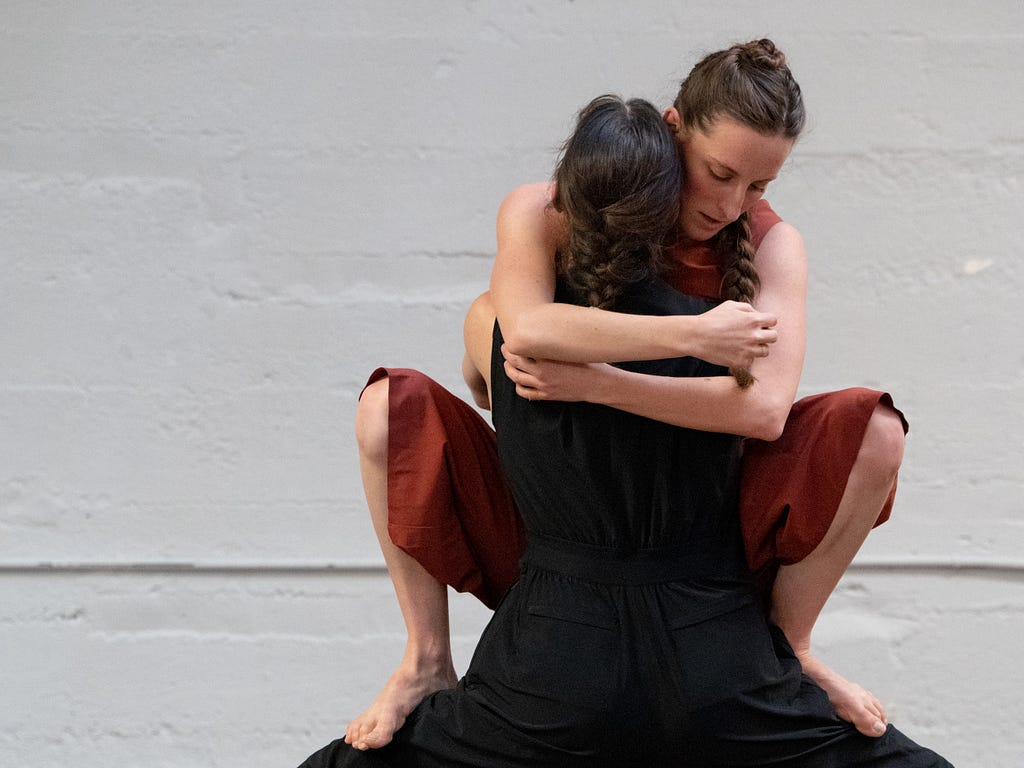
On Thursday August 1st, Paufve Dance premiered Sisters as part of ODC Theater’s State of Play, a curated festival of new contemporary dance choreography and performance. Paufve Dance artistic director Randee Paufve’s Sisters was an exceptional example of beautifully-crafted, abstract storytelling. The performance offered a compelling exploration told through female perspectives, brought to life through Paufve’s distinctive choreographic voice on what she describes as “an anthology of dances regarding sisterhood, motherhood, pregnancy, birth, abortion, death, and reclaiming.”
The performance opened with a lone dancer exploring the warm ether around her. Her liquid and expansive arms carved through her kinesphere but were interrupted at times with moments of stillness as she stared forward. Her use of contrasting gestural movements played between heavy and light, bound and free. This was the first of several episodic solos, and later duet and trio vignettes, that showcased a distinct facet of the femininity and femaleness. These smaller sections were not merely individual statements but rather integral pieces of a larger, interconnected puzzle that revealed perhaps the inner narrative and the struggles inherent in the female experience.
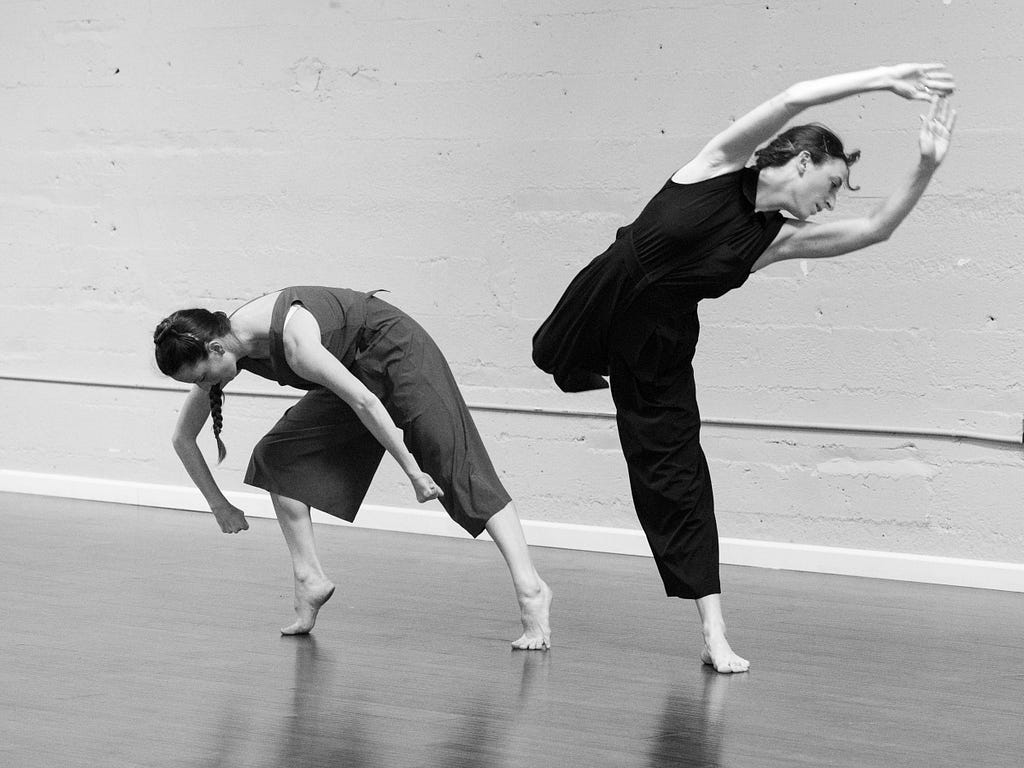
In contrast, the role of the ensemble continued to shift throughout. Pauvfe was masterful in her choreographic choices by having the choir symbolically shift from that of “witness” to background tableau, to act as a prop or a frame to the individual, and to act as a response to the collective memories of the woman dancing their stories. One crystalized, impactful moment was when the full cast of 11 dancers — Shruti Abhishek, Erin Coyne, Lily Gee, Anna Greenberg Gold, Olivia Caldeira Holston, Irene Hsi, Maurya Kerr, Molly Levy, Juliana Monin, Laila Shabazz, Elizabeth Zepeda — after a flurry of athleticism and effort, steadied themselves on one leg in a technically challenging balance. As each dancer caught their breath, wobbling, reaching their limbs wide to steady themselves, a hand was placed on another’s back or foot or arm, to help steady themselves together. This moment seemed to emphasize the importance of solidarity and community through a literal physical web of support.
Paufve’s use of female dancers as central figures in both solo and ensemble contexts allowed for a multi-dimensional portrayal of female identity. The performance becomes a dialogue between individual narratives and collective experience, reflecting both personal and universal aspects of womanhood. In essence, Sisters is a powerful statement. Paufve’s choreography not only captivates with its craft and technical prowess, but also resonates deeply on a thematic level, offering a poignant exploration of the complexities and triumphs of female experience.
Jeanette Jing Male is a choreographer, performer, and proud alumni of the Mills College Dance MFA program. She currently is the Dance Program Coordinator at City College of San Francisco, where she teaches dance history, composition, modern & contemporary technique, and strength training
Paufve Dance Crafts Multidimensional “Sisters” was originally published in ODC.dance.stories on Medium, where people are continuing the conversation by highlighting and responding to this story.