
Garth Grimball
Smuin Contemporary Ballet has a long tradition of giving time and space to its dancers to develop as choreographers. Spring Point, launched this year, adds production value to the developmental equation. Four choreographers — Julia Feldman, Babatunji, Cassidy Isaacson, and Maggie Carey — presented world premieres at ODC Theater on Feb 13–15*.
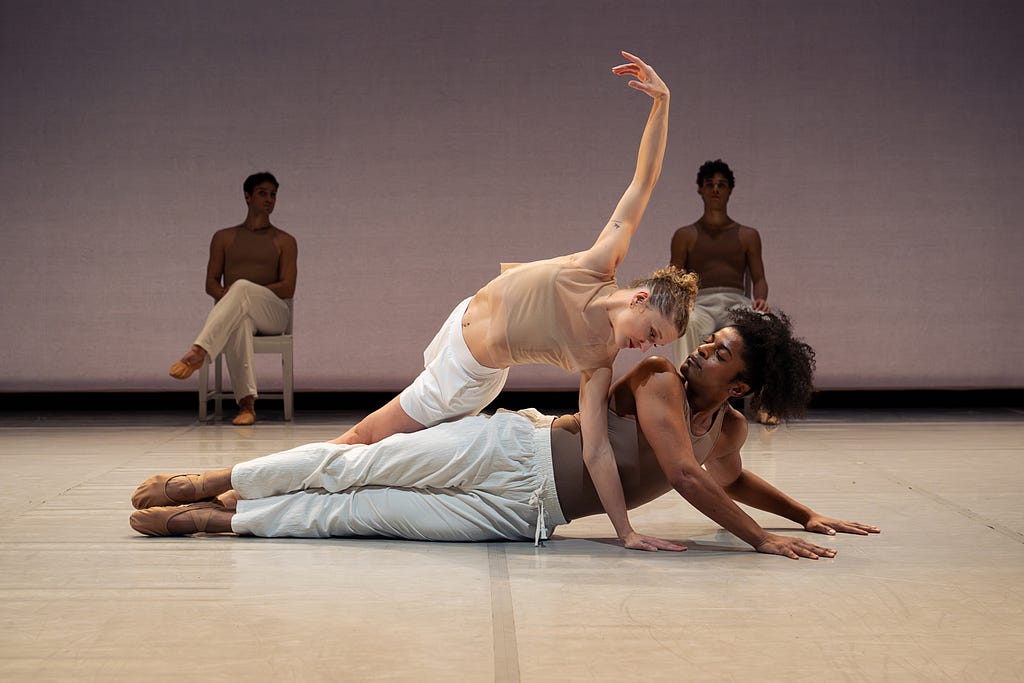
Feldman’s Wallflower opened the program and was the most cohesive of the works. Eight chairs lined the stage perimeter. Eight dancers entered wearing tan tops and white bottoms. While none of the cast ever looked nervous to leave their chairs for the dance floor, the wallflower motif was present in the attention the seated gave to the dancing. Solos, duets, quartets, octets took and ceded center stage. In 2022 Feldman was a NY Choreographic Institute artist, and Wallflower speaks to NYCI’s affiliation with NYC Ballet; Feldman’s style is in the lineage of Balanchine and Justin Peck. Epaule was not a line but a dramatic diagonal push. Developpe and grand battement punctured stillness rather than showed off turn out or height. Actions and bodies accumulated in the space at increasing speeds, giving an engine to Wallflower’s bloom.
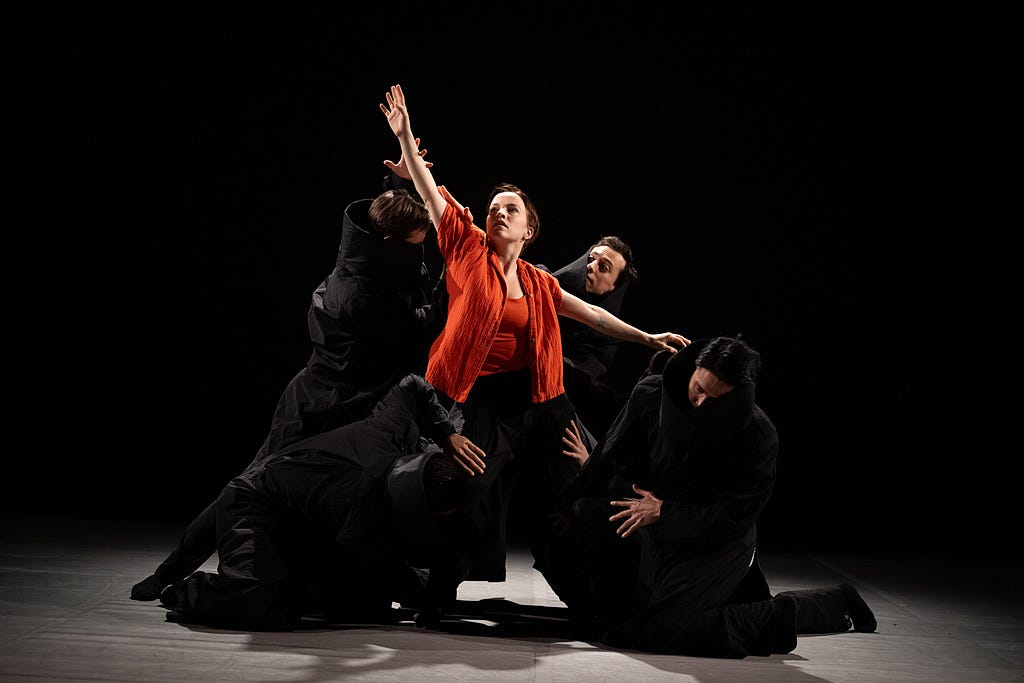
Babatunji has created some of the most memorable duets in the last few years. In Society he worked with six dancers, and while inventive, the whole didn’t equal the parts. Dim lighting revealed the sextet upstage right dressed in voluminous black coats with collars so high only the eyes and above were visible, like Yohji Yamamoto monks. The group swamped across the space with an occasional flutter of the coats. Dancers broke out of their cocoons in acts transgressive to the group. AL Abraham leapt out in frivolity before being reabsorbed. Isabel Borges and Yuri Rogers were star-crossed as the group kept pulling them apart. When the duo dropped their coats to reveal emerald tops, they stepped backward away from each other and subtly onto their coats. The group pulled the jackets from the opposite ends making Borges and Rogers look as though floating apart: a simple idea inventively accomplished. Charmaine Butcher was unable to fully break free as the group manipulated her a la the Pink Lady solo in Pina Bausch’s Kontakthof. Babatunji is a rare performer who can embody contemporary, hip hop, breaking, and ballet styles into phrasing that feels as natural as breathing. Translating that embodiment onto others is challenging. The Smuin dancers were committed, yet going from the crybaby into breaking floorwork into ballet felt like watching cards be dealt out rather than shuffled into a deck.
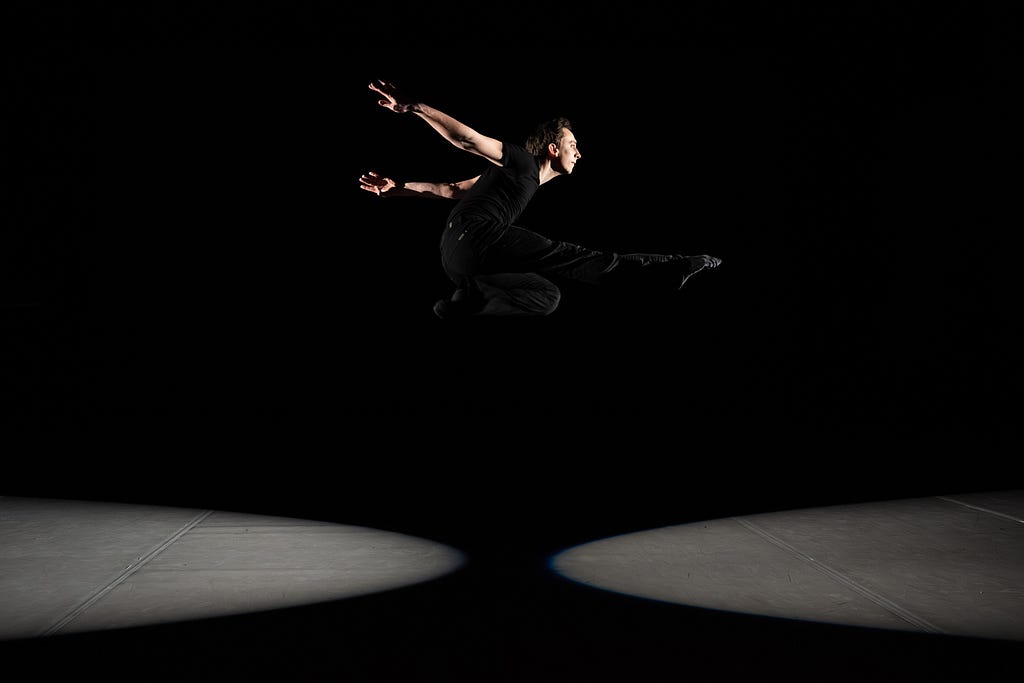
Cassidy Isaacson’s Chapter 3 opened with two dancers prostrate beneath a spotlight. Borges, in a brick-colored dress, and Cameron Cofrancesco, in all black separates, extended out and folded in unison before standing. Abraham, Butcher, Tessa Barbour and João Sampaio joined to create three unison duets of evolving lifts and weight sharing. Chapter 3 was moody and knotty. Michael Wall and Aukai’s atmospheric music was matched by Michael Oesch’s delicate lighting design. Isaacson’s choreography prioritized dancers moving on and around one another. I don’t know if I have previously seen partnering via hand-to-neck but it is a memorable image. The dancers tangle and flip into each other like a vine up a tree. Is the relationship symbiotic or parasitic? There are a lot of movement ideas in Chapter 3, and some of them could use more room to breath. Cofrancesco’s brief solo was a respite as he traveled from stage right to left in silence. The complexity of the partnering increased like a game of truth or dare — the stakes of vulnerabilities and risks moved ever higher. In the end, the dancers ran into a black out, ready for another chapter.
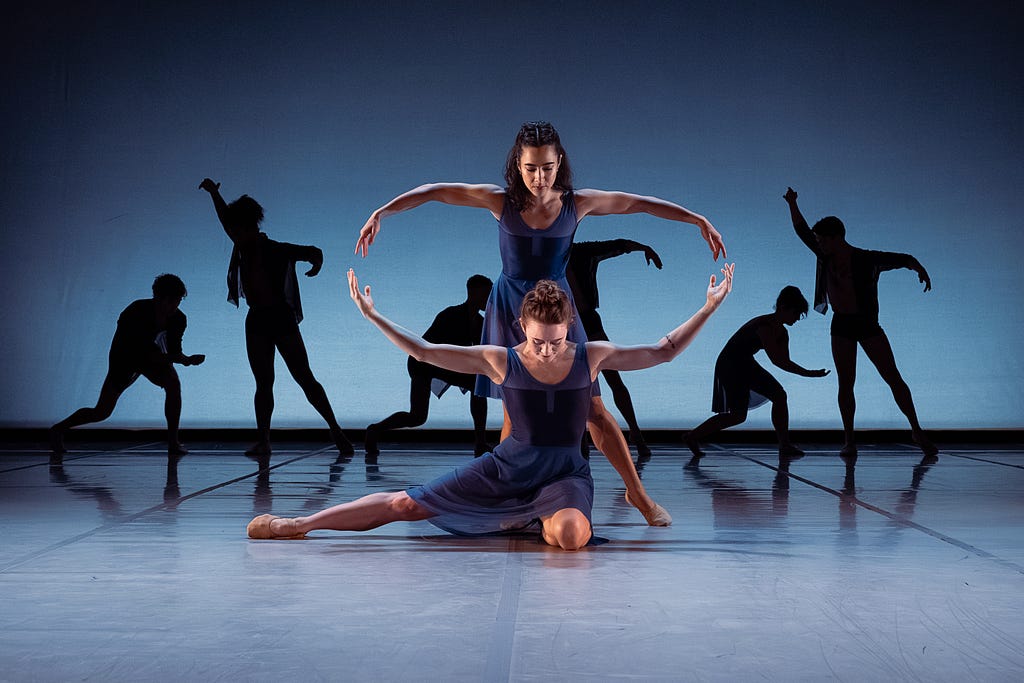
Maggie Carey followed in the Smuin tradition of ballets to pop music. In The Blue Hours Of Morning was set to a suite of songs by The Oh Hellos. Carey succeeded in group travel. The octet ate up the stage in canon sequences and counterpoint between a pas de deux and supporting corps. The movement swelled like a wave as three lines formed and shifted in opposing directions. Motifs emerged as a phrase — swing arms into second position plie, hop, sway back, look out — enabled dancers to break out into solos or join the surge. Jacopo Calvo brought an easy grace to a solo that risked being overly dictated by the sonic formulas of pop music. In The Blue Hours Of Morning had the eagerness of a morning alarm bell, mawkish but moving ever forward.
There is much to look forward to from Smuin’s Spring Point program.
Garth Grimball is a writer and dancer based in Oakland, CA. He is a contributor to Fjord Review, SF Examiner and Dance Media. He is the editor of ODC Dance Stories.
*Unlock a voyage through epic dance this spring with 15% off tickets at ODC/Dance, Smuin, and LINES Ballet* performances — Three iconic dance companies. One Spring Dance Passport. Use code DANCEPASS15 at checkout.
Smuin’s “Spring Point” Program Points Forward In New Works was originally published in ODC.dance.stories on Medium, where people are continuing the conversation by highlighting and responding to this story.