
Garth Grimball
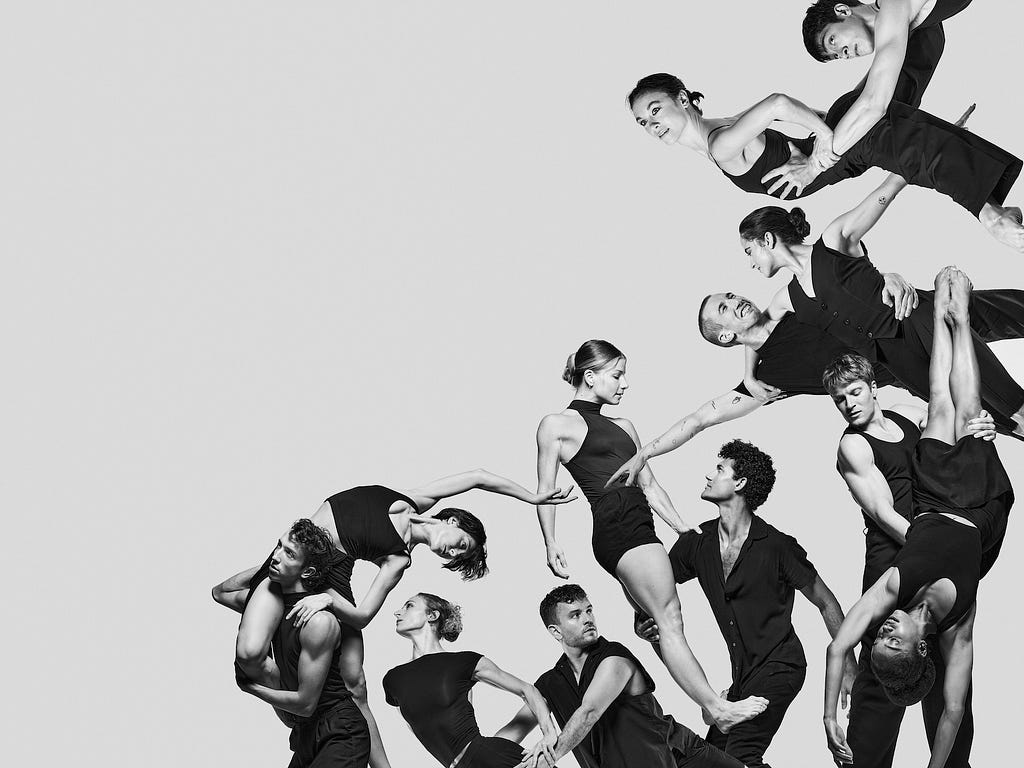
To celebrate its 60th anniversary Diamond Jubilee, Twyla Tharp Dance performed two works at Zellerbach Hall, Feb 7–9, as part of CalPerformances 2024-2025 season. Tharp’s company was last seen in the Bay Area 10 years ago to celebrate 50 years of dancing with two premieres. For this anniversary tour Tharp has restaged Diabelli from 1998 and choreographed the new SLACKTIDE, a dance sequel to arguably her most famous ballet, In The Upper Room, from 1986.
Diabelli, choreographed to all 33 Diabelli variations by Beethoven (performed live by Vladimir Rumyantsev), is a mullet hairstyle of a dance, split between business and party. The ten dancers are dressed in halter tops with tuxedos printed on them and black jazz pants, formal but not at all. The choreography is as demanding as anything in the classical ballet repertory (grand jete, single leg balances, so many en dehors pirouettes) with the jazzy, playful idiosyncrasies that are signature to Tharp’s movement vocabulary (slouched shoulders, body rolls, shimmies). But unlike Deuce Coupe (1973) which showed the futility of limiting choreography to one dance lexicon by smashing two together, or, Push Comes To Shove (1976) which created a movement journey from the pedestrian to the virtuosic, Diabelli felt like business (technical virtuosity) and a party (jazzy flourishes), but there was no frisson of contrasts colliding, just two styles put together.
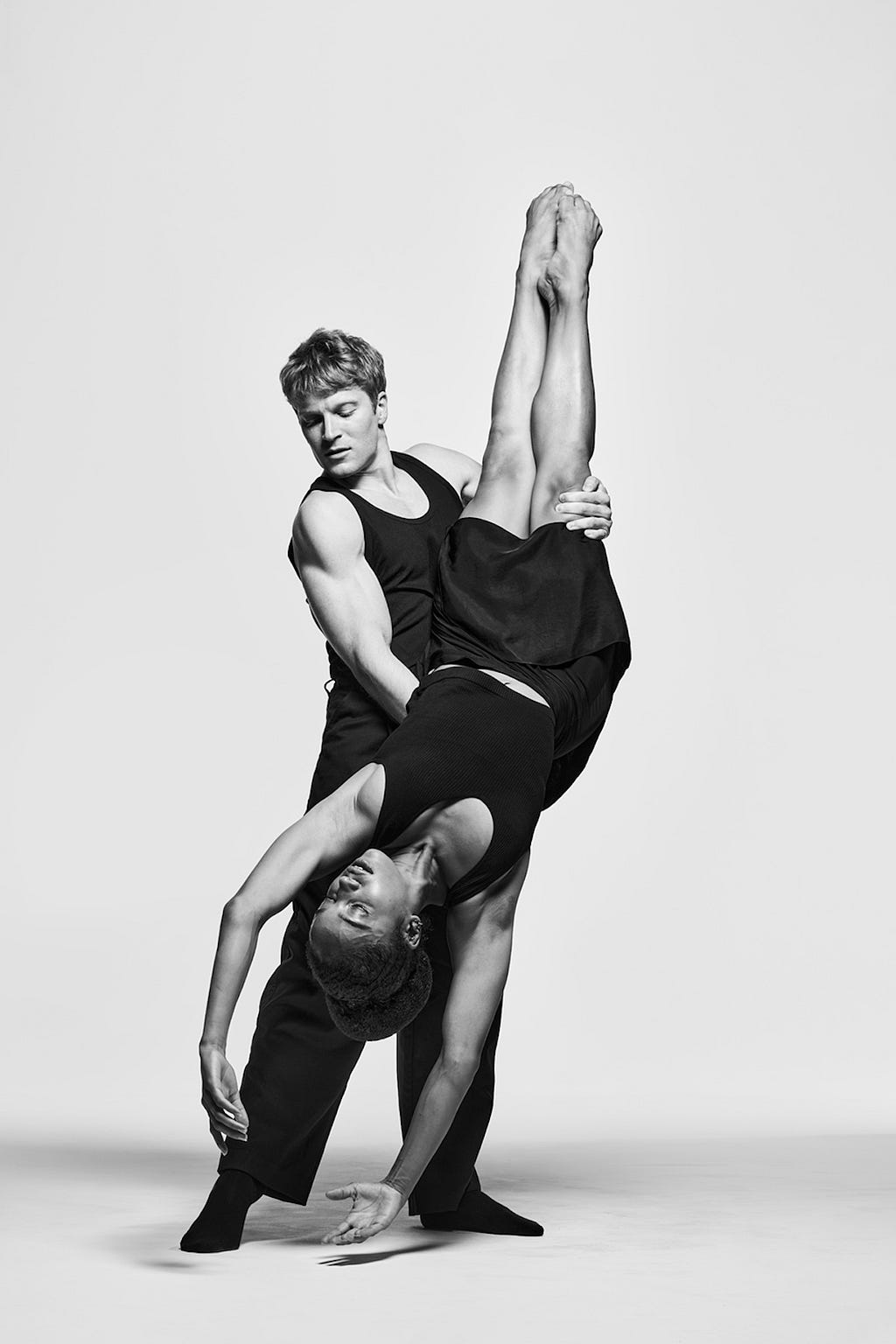
The dancers, all technicians of the highest accord, performed with sincere commitment. Miriam Gittens was able to bring out textures in the music through her considered phrasing. Whether arcing back out of a rond de jambe en l’air or walking across the stage with arms wrapped around her torso, she made the movement sing. Reed Tankersley and Angela Falk succeeded in imbuing the choreography with personality. The 33 variations were divided between performing straight to the audience and performing for each other as fellow dancers. Tankersley and Falk bridged the divide in performing for both groups with an easeful generosity.
If you’ve read Tharp’s book The Creative Habit, you know the woman loves to conquer a creative challenge. By the end of the hour-long Diabelli, I am convinced that she choreographed all 33 variations with equal dedication, but I don’t know if a challenge met is a creative conquest.
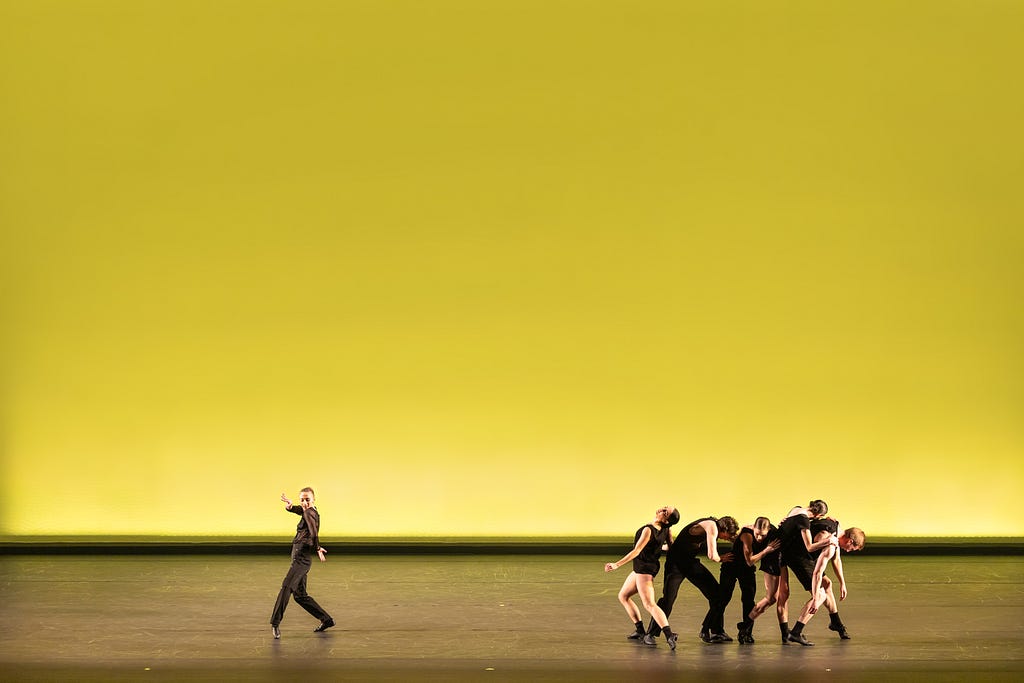
SLACKTIDE began with the final choreography of In The Upper Room on a fog-filled stage, but the 12 dancers faced upstage and wore black separates instead of stripes and red. Third Coast Percussion played Philip Glass’s Aguas da Amazonia live with spectacular feeling. Justin Townsend’s lighting design washed the stage in saturated colors. The dance was loose around the edges allowing more of the dancers’ personalities to come through. The choreography was as technical as Diabelli but the structure felt like swimming in music rather than sticking to it. Solos, partnering and group dances full of references to previous works overlapped. Motifs from Upper Room — jogging backwards, hopping into a lunge with arms in a split diagonal, turns in sur le cou-de-pied plie — and slowed down versions of Diabelli choreography reappeared. In one particularly affecting section two circles of dancers went from revolving around separate points to opening up into unison high side kicks to the right that caused their left sides to melt down as the legs descended. The movement added punctuation to Glass’s arpeggios and embodied time’s ability to go slow and happen fast.
When Tharp formed her company 60 years ago her dancers came from varied movement practices that delivered varied interpretations of the choreography. The dancers had technical chops but their movement qualities didn’t immediately reveal years at the barre. Now, Twyla Tharp Dance seems to have aged out of any foibles that reveal personalities. To witness exquisite technique is sublime, yet memory favors a personal connection.
Garth Grimball is a dance writer and artist based in Oakland, CA. He is a contributor to SF Examiner and Dance Media. He is the editor of ODC’s Dance Stories.
Twyla Tharp Dance Looks Back Two Ways was originally published in ODC.dance.stories on Medium, where people are continuing the conversation by highlighting and responding to this story.