
Nkechi Njaka
“Dance as experimental theater without knowing that it is experimental theater.”
— ainsley tharp
Experimental dance and performance art have always had a fluid relationship in the San Francisco/ Bay Area dance space, and in recent years, it seems like dance has become more absorbed into performance art frameworks — often emphasizing concept, drag, use of props, installation, and/or theatrical elements more than movement itself. This was certainly the case for this year’s ROT Final Closing Performance at CounterPulse.
Described on the festival’s Instagram post (there were no physical programs) as The Performance Marathon and “an evening extravaganza of art by local performers, DJ and dancing post performances,” the stage was set to show work that would shatter expectation and have minimal tech. The curatorial team had intentions of honoring the late Kathleen Hermsedorf (who was the founder, producer, and co-curator of the FRESH Festival in San Francisco from 2010 to 2020) as well as the practices and legacy of the San Francisco experimental dance history of Contraband and Dance Brigade. Contraband and Dance Brigade are both Bay Area performance groups that use dance to widely explore social and political issues. Contraband dissolved in the 1990s, while Dance Brigade is still active.
When speaking to ainsley tharp, a dance artist, curator and steward of ROT Festival, she mentioned the ethos of another festival called “Too Much,” organized by Keith Hennessey and Julie Phelps, where artists were encouraged to be excessive and maximalist in their performances. ainsley tharp moved to San Francisco because of FRESH Festival eight years ago. She arrived to attend the festival, but then found a job, an apartment and was asked to make work with local artists so she didn’t leave. Her involvement with the festival over the years has asked her to think expansively and creatively as well as resourcefully. This informed her curatorial bias when putting together this show with Clarissa Rivera Dyas, framing the parameters of this show to insist that artists take risks. “FAILING HARDER,” ainsley tharp emphasized. As well as disrupting cultural norms, euro-centric ideals, capitalistic influence, and doing without hierarchies and elitism that exist in dance performance space.
This was noticeable in that the show didn’t start on time, people wandered in as they pleased, sat on stairs and moved during performances, and even sang along in the closing piece. There was a communal quality; it felt inclusive, supportive and unpretentious. There was a general agreed upon practice of holding space for failures, pretending, and bravery. The audience was informed that there was no tech rehearsal and that “We don’t know what is going to happen!” This intersection of dance making as a potential for failure can be considered a subversive tool for change, drawing on José Esteban Muñoz’s philosophy of queer futurity. That and pushing the audience to perhaps experience discomfort, while not experiencing harm. The show ran for almost two hours. Overall, the works each felt experimental and raw in their own way — provocative, even.
In San Francisco, the edge of performance art has historically been about pushing boundaries — whether in identity, politics, aesthetics, or form. The city has long been a home for experimental artists, from the radical performance work of the 60s and 70s to contemporary intersections of technology, embodiment, and activism. But what is “provocative” now? And what purpose is it serving?
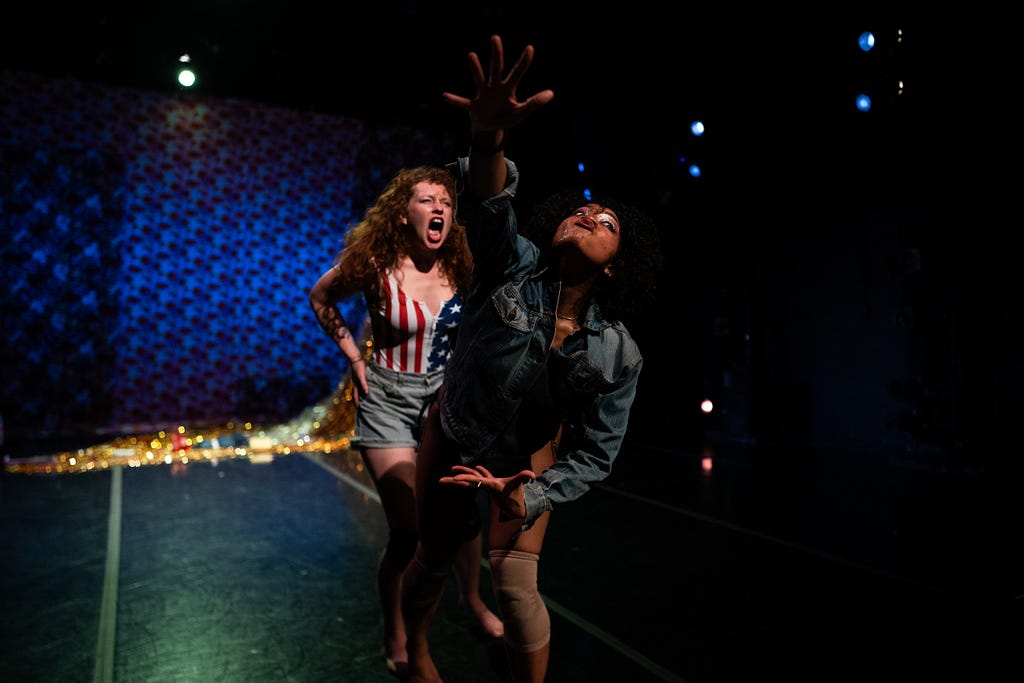
The statement made in art space depends on what feels urgent by the artists. There were works that touched on indigeneity, patriotism, trans rights, the current political climate, Black identity, interracial dynamics, queerness, power, kink, over consumption and the Palestinian genocide. As audience members, we watched and got to reimagine intelligence, perception, and presence outside of dominant paradigms. This then becomes about reclaiming space for the body in a world that increasingly disembodies us. It is about confronting social, ecological, or technological crises in ways that wake people up rather than shut them down. Furthermore, creating a space post performance for all people in the space to dance during the “post-performance dance party” was an incredible way to create community, inclusion, belonging in an embodied, somatic, expressive way. This, too, felt like an experiment; and an urgent need.
To be provocative means something different in every context. It’s not just about shock value; it’s about challenging perceptions, disrupting norms, and allowing people to feel something deeply — whether that’s discomfort, awe, or revelation. In today’s landscape, where audiences are often overstimulated by digital media and social discourse, the challenge is to create work that slices through the noise in a way that is meaningful rather than merely sensational. We could consider this meeting a growth edge — for both the artists, the audience present and the future of experimental dance in San Francisco.
Nkechi Deanna Njaka (she/her) is a practice-based creative researcher, choreography artist, public speaker and culture writer whose work explores the intersection of embodied presence, somatic research, well-being, science, art, and social practice. She is the founder of The Compass, NDN lifestyle studio, and co-founder of the sleep app DreamWell, emphasizing mindfulness and creativity as essential for individual and global well-being.
Failing Harder At ROT Festival’s Closing Performance was originally published in ODC.dance.stories on Medium, where people are continuing the conversation by highlighting and responding to this story.