
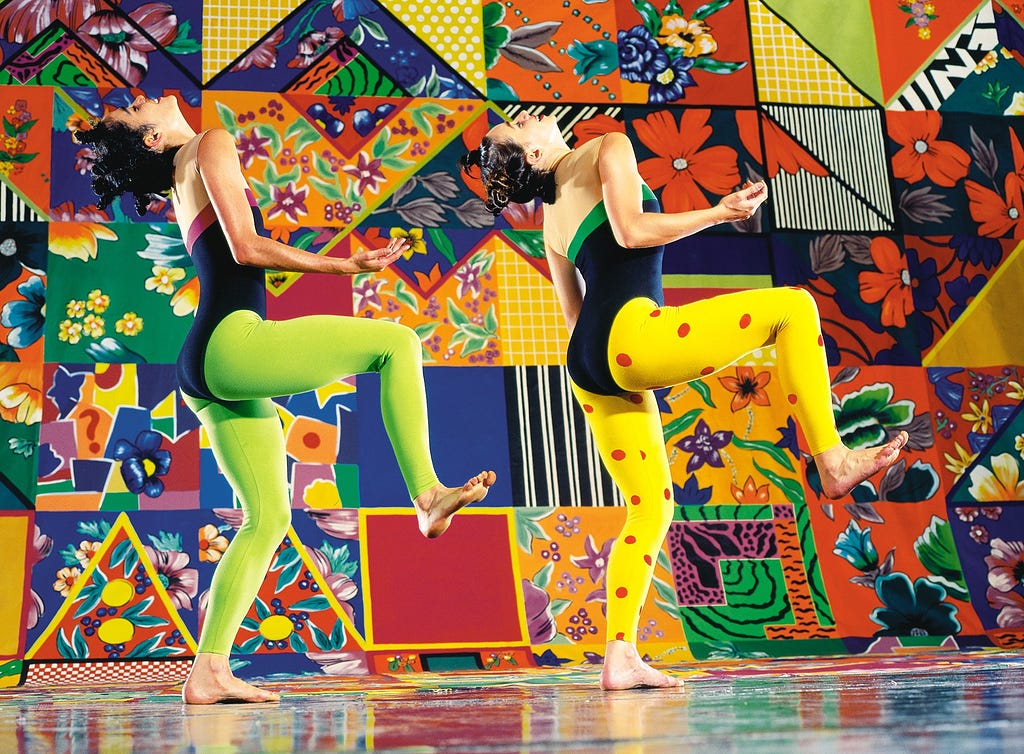
Garth Grimball
The Brazilian-based dance company Grupo Corpo performed at Zellerbach Hall on April 25–26, and I wish that their theatrical run were longer and even more so that they would become a staple of CalPerformances seasons like Alvin Ailey or Mark Morris. The 22 dancers of Grupo Corpo performed some of the most thrilling dancing I’ve seen in years.
The company opened with their signature work 21, choreographed by artistic director Rodrigo Pederneiras in 1992. The title refers to geometry that influenced the original score by Marco Antônio Guimarães. The score has overlapping time signatures, polyphony, rhythms that become melodies, and melodies that float into improvisation. But the music, like the choreography, rides confidently through each transition without losing its point of view.
The dance begins with the cast in pale yellow unitards behind a downstage scrim that keeps the dancers at a hazy remove. 21 plunges into dancing and the movement seamlessly blends ballet turns and leaps with folk dances. Patterns and phrases develop as the cast forms and dissolves into groups, overlapping and creating visual counterpoints that tease out the music’s textures.
In a particularly arresting moment, the entire cast faces forward with their arms bent so their palms are facing each other in front of their torsos, as if measuring a foot. Their fingertips trace circles as their forearms drop and rise from the elbow, slow down and quick up. Both arms move together, the right arm pauses at the top of the circle, the left arm does a solo circle and picks up the right at the top again. The effect is mesmerizing. The motif develops with subtle changes among the dancers in speed or levels or facing.
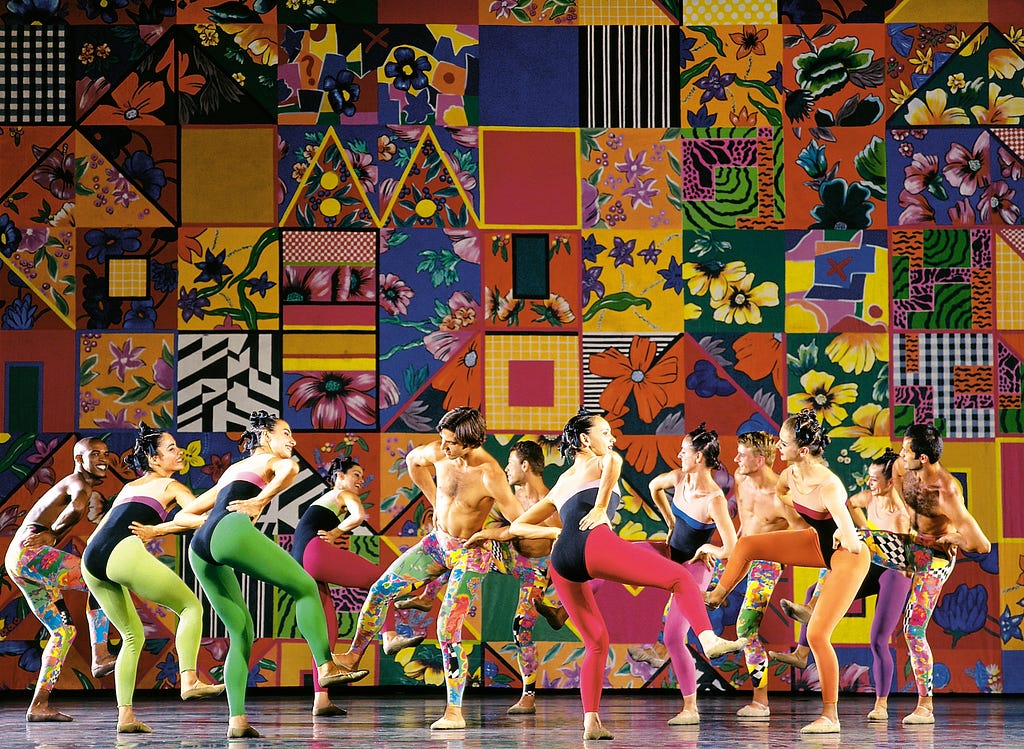
After a blackout, the scrim rises, a backdrop by Fernando Velloso is revealed and the dancers come out in Freusa Zechmeister’s bright, patterned costumes that match the quilted design behind them. The choreography maintains its close relationship with the music as the vocabulary opens out to include more folk dancing motifs and more partnering. The dancers fling and fly at each other with an abandon that conveys the deep trust of a true ensemble. Their joy in dancing is contagious. 21 makes you want to get out of your seat and join them.
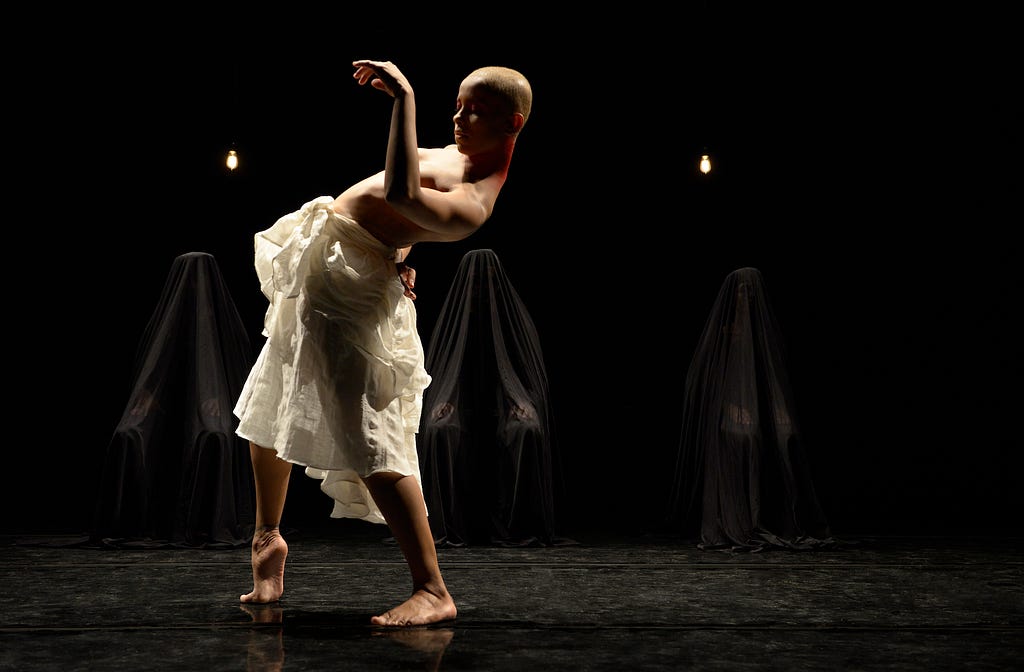
Gira, choreographed by Pedernerais in 2017, is influenced by Candomblé and Umbanda gatherings where congregations come together to worship the deities of the terreiro (a site of worship in Candomblé) with chants and ritual dances. Pedernerais reconstructed “many of the gestures and movements he experienced in the rites of Candomblé and Umbanda,” especially ceremonies for the orixá Eshu. The music by Metá Metá travels from atmospheric to jazzy to bracing sounds. The lighting design by Paulo and Gabriel Pedernerais features small hanging bulbs the emit just enough light to make you feel like any more light would be a disturbance.
The dancers are uniform in white skirts with bare torsos and necks painted red. Chairs line the upstage and stage left perimeters. Seven dancers open Gira as if in a trance with their eyes closed and their torsos bent. The rest of the cast are seated, covered in black tulle veils. The dancers’ spines are rarely fully erect; they fold, bend, twist, curve, arch, and crumble. Like 21, the choreography sustains balletic technical virtuosity within the vocabulary of worship.
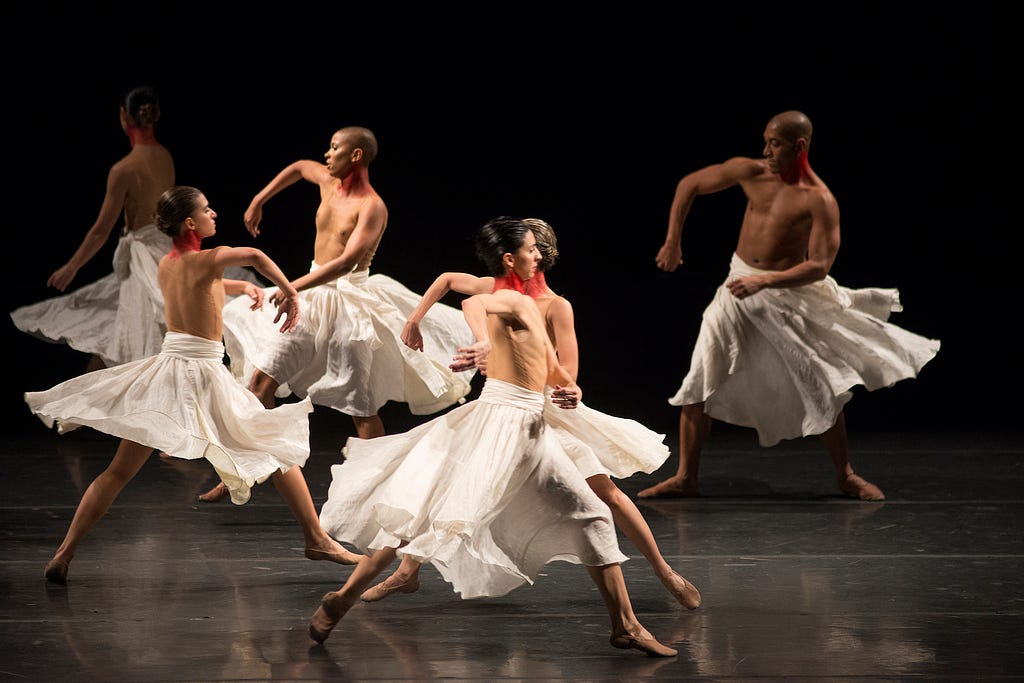
Many of the duets evoke baptisms with one dancer being dipped and embraced by another. The cast move back and forth from seated to dancing, from veiled to visible, from individual to united. Their commitment to the content of the work effaces the performative reality of the stage. The quality of their performance made me forget I was watching a performance.
Grupo Corpo is the rare artistic experience of content and form being of equal caliber. And the caliber is superb.
Garth Grimball is a dance writer and artist based in Oakland, CA. He is a contributor to SF Examiner and Dance Media. He is the editor of ODC Dance Stories.
Grupo Corpo Thrills In “21” And “Gira” was originally published in ODC.dance.stories on Medium, where people are continuing the conversation by highlighting and responding to this story.