
Nkechi Njaka
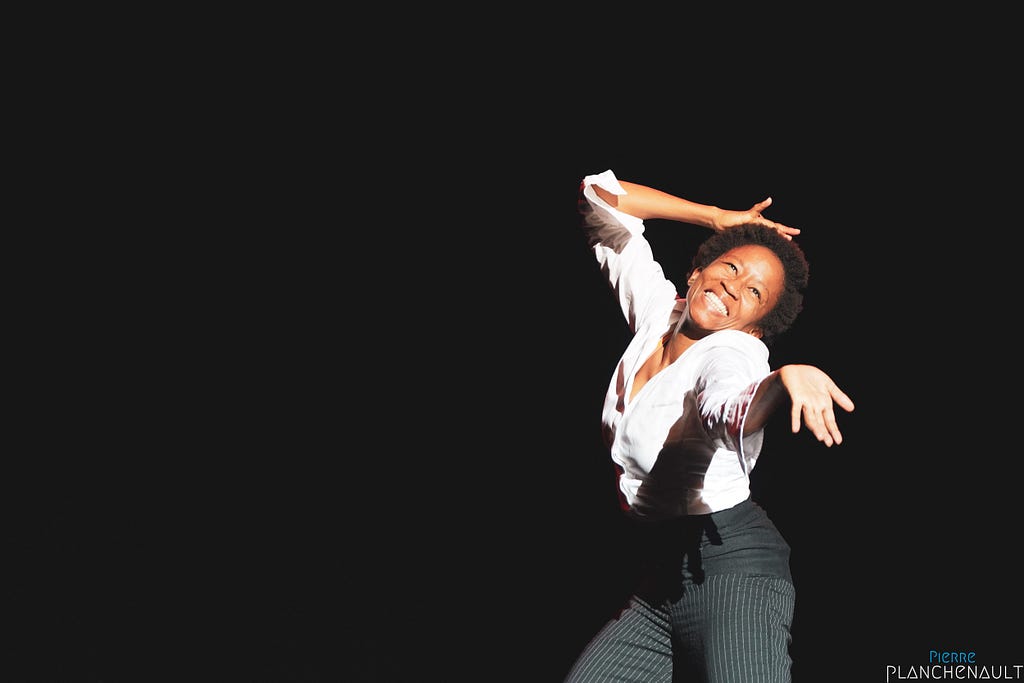
In An Immigrant’s Story, Wanjiru Kamuyu claims space boldly, vulnerably, and unapologetically. Presented by ODC Theater under the Risk Takers category in their annual State of Play festival, this solo is a beautiful choreographic daring that unfolded courageously and left the audience astonished by the bravery, complexity and endurance of the work.
This solo work, originally choreographed in 2020, began with the stage outlined in upside down chairs that created a distinct border, and the voice of Kamuyu filling the dark theater before she emerged dressed in an African-print top, designed by Berlin-based designer Birgit Neppl, black pants and Doc Martin boots. For fifty-five minutes, we were on a theatrical journey that included rigorous dancing, speaking, singing and a shifting in personas through onstage wardrobe changes. The layers Kamuyu wore were Neppl’s idea. Neppl was inspired by the words “migration” and “(im)migrant” and deeply motivated by the theme of this work and the collection of the 19 stories that came from the interviews that Kamuyu conducted during the Pandemic in Paris. Each garment layer represented a part of one’s story and within that, the collective story evolves. In each performance, 5–6 of the 19 stories were shared through gorgeous somatic storytelling. This movement is woven with the text, reflecting a cultural multiplicity of upbringing and training, contemporary dance, street style, deeply lived gestures, African diasporic traditions, and industrial sound. At one point Kamuyu left the previously mentioned distinct borders of the stage and wandered into the audience, slowly walking between seatbacks and knees. The stories could not be contained by the stage. Instead, they existed within a borderless aesthetic where movement, memory, migration, and radical self-expression intersect. The entire performance insisted on being seen, heard, and felt.
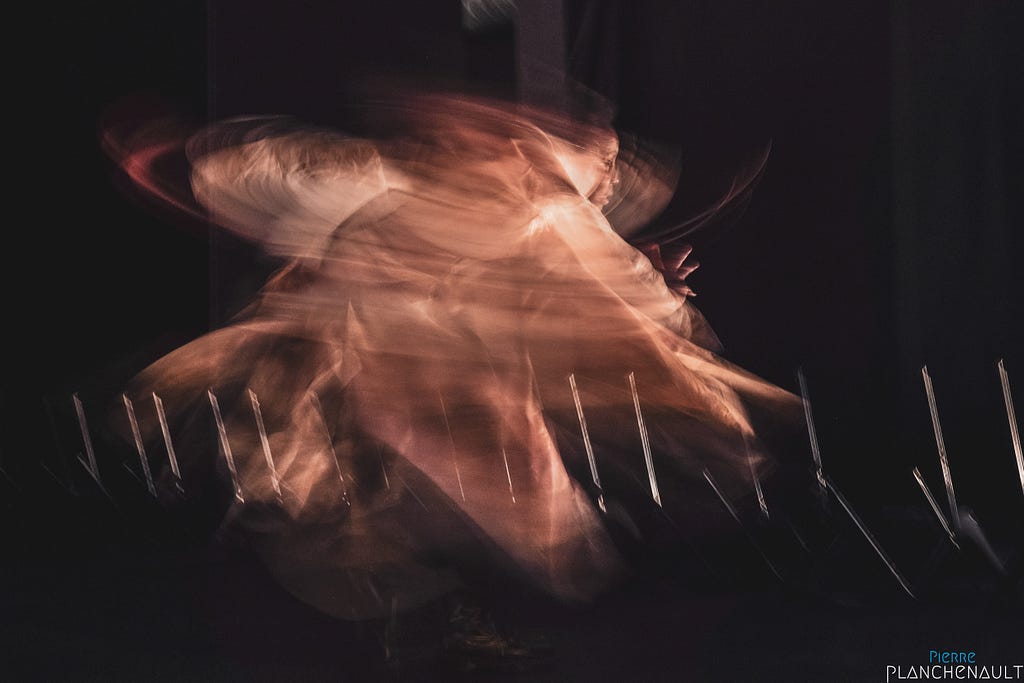
Kamuyu’s experience as a Kenyan-born, U.S.-raised, Paris-based artist folds into the work, resisting tidy categorization and enriching its complexity. What emerged onstage was a raw and honest definition of diasporic, one that includes the dissonance, unspoken violence, and beauty of relocation, displacement, and the slow, spiritual labor of becoming while not fully belonging. This work explores how identity is shaped not just by place but also by perception. As well, the work considers how race, skin color, class, accent, and history are mapped onto the body, and how the Black femme form is surveilled, misunderstood, ridiculed, policed, exoticized, and invisibilized. Kamuyu brings these painful complexities to the stage not through didactic explanation but through a somatic storytelling.
A physically and emotionally demanding solo that was also grounded and guttural, Kamuyu’s choreography moved with layered intention. At times minimal and meditative, at other times explosive and theatrical, the performance oscillated between vulnerability and command. There was no fourth wall — her gaze met the audience’s, her voice broke silences. Specifically, Kamuyu’s sang songs in Yoruba, the language of the Yoruba people of Nigeria. It was a stunning, emotive moment. Remaining on stage for a full hour, alone, is an artistic and emotional feat. As was impressively dancing, turning, crawling, and running in Docs. In this work, Kamuyu is not offering a representation of an immigrant experience, she is the embodiment of one. The exhaustion, the repetition, the moments of clarity, disorientation, humor, despair and pride were all shared. All of it was present. All of it was felt. The work embodied the rigor and the endurance of navigating the common themes explored in the larger experiential conversation of “otherness.” And the entire performance was a powerful declaration of perseverance, resistance and liberation.
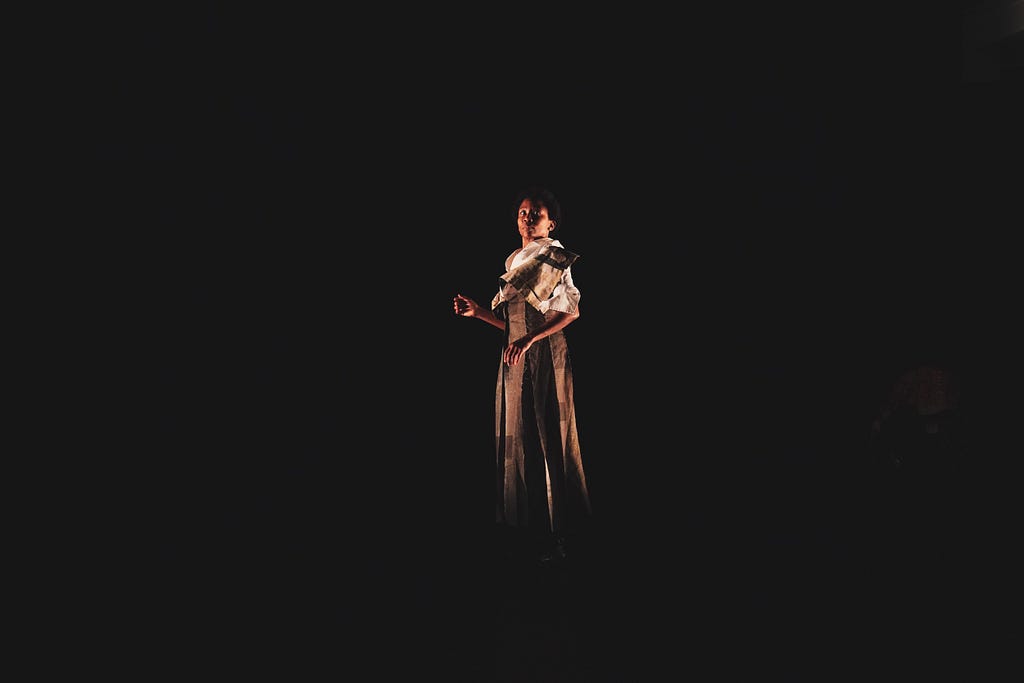
Herein lies the power of An Immigrant’s Story. There is power in the refusal to soften the complexities of “otherness.” Kamuyu beautifully excavated stereotypes and perceptions of identity that cling to Black and brown immigrant bodies while onstage. Off-stage, Kamuyu’s solo presence is a metaphor for the many lives immigrants must live simultaneously: the translation, the confusion, the erasure, assimilation and most importantly sovereignty. This solo confronted those narratives — sometimes dancing through them, sometimes collapsing under them, sometimes singing over them. Her voice, both literal and figurative, is an anchor to the piece’s emotional arc. The undeniable bravery in her choice to remain on stage, alone, for nearly an hour combined with the emotional, physical, and symbolic weight of a global story through her singular presence was moving — resulting in a standing ovation.
What truly remains the most striking accomplishment is how the performance didn’t make a spectacle out of pain. Instead, Kamuyu created a space where multiple truths coexist — rage and joy, dislocation and belonging, fragility and power. Consequently, she doesn’t simplify the story of immigration or identity. She complicates it. She honors it. She reclaims the narrative by making it her own. Inviting the audience into an intimate witnessing, she challenges the viewers to consider: What does it mean to belong? Who gets to move freely? What stories get centered, and who tells them?
Through An Immigrant’s Story, Wanjiru Kamuyu affirms the stage as a powerful site of resistance and reclamation for Black femmes. In a world that too often seeks to silence or diminish migrant narratives, Kamuyu expands them and gives voice to them. In stretching beyond borders, complicating expectation, and insisting on presence, her body becomes both archive and medium, refusing erasure with every breath, sound, and expression.
Nkechi Deanna Njaka (she/her) is a practice-based creative researcher, choreography artist, public speaker and culture writer whose work explores the intersection of embodied presence, somatic research, well-being, science, art, and social practice. She is the founder of The Compass, NDN lifestyle studio, and co-founder of the sleep app DreamWell, emphasizing mindfulness and creativity as essential for individual and global well-being.
Wanjiru Kamuyu Takes Up Space Through Truths Of (Im)migrant Stories was originally published in ODC.dance.stories on Medium, where people are continuing the conversation by highlighting and responding to this story.