
Nkechi Njaka
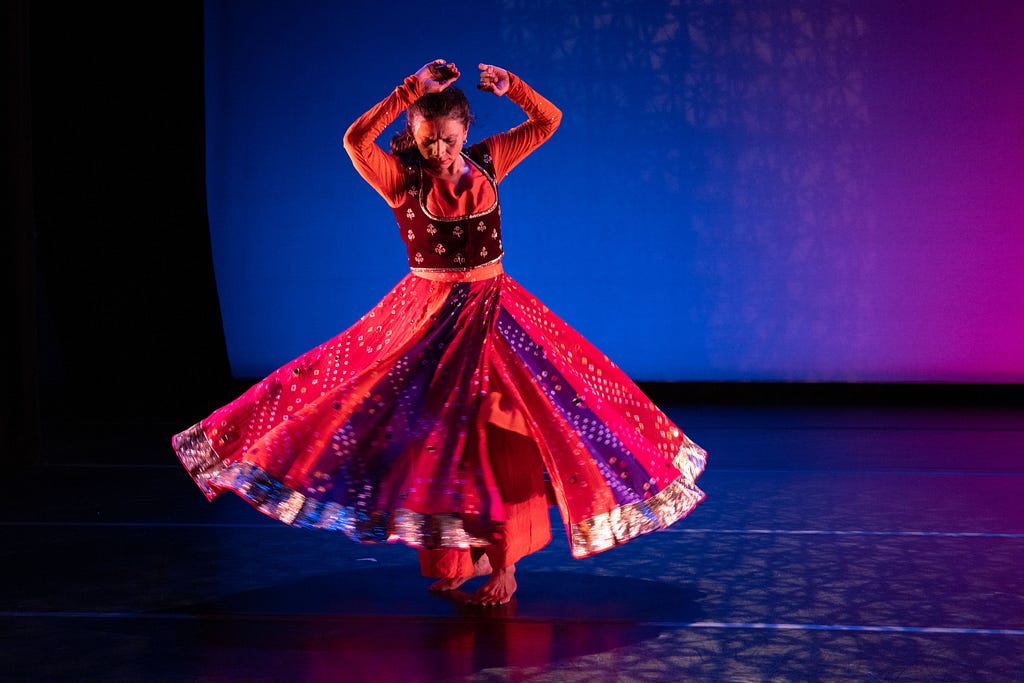
Monsoon Dance Company performed Finding My Dha at ODC Theater on September 19–21. Under the vision of artistic director and choreographer Karishma Sharma, the performance transformed the theater into a layered space of rhythm and memory. Rooted in Indian classical dance while reaching toward contemporary vocabularies, this new work thoughtfully explored inheritance and identity through intergenerational storytelling.
The audience was invited to witness a living dialogue between past and present, as dancers — which included Sharma’s daughters — explored the intersections of selfhood and self-discovery through a mixture of dialogue, theater and movement.
Finding My Dha is built on the Kathak tradition, yet Sharma expands the form into contemporary soundscapes, choreographed movement, and collective storytelling. The work’s title references “Dha,” a resonant syllable in tabla rhythm. It is a grounded, full-bodied pulse that mirrors breath and home, and the interconnection between rhythms and cultural experience. “In both Kathak and tabla, Dha is a resonant, foundational syllable — a deep drum sound mirrored by the dancer’s full-footed stomp,” Sharma explains. For Sharma, Dha is a personal inquiry and microcosm of her varied experiences and a space to explore tension, continuity, and transformation in identity. Influenced deeply by her teacher Urja Desai Thakore, Sharma’s research evolved past rhythm. This practice evolved to be an understanding of balance between extremes and conflicts in both dance and life.
The inclusion of young dancers emphasized the intergenerational quality, giving a texture to diverse voices and perspective while shaping the performance’s dynamic. “In Finding My Dha, the presence of daughters in the cast feels powerful, even tender,” Sharma notes. “To truly honor and value them, it became essential to bring real bodies representing them into space. This reflects the reality of my own community, where cultural gatherings are inherently intergenerational.” By weaving her daughters and her mother’s influence across continents into the choreography, perspectives of tradition intersected, merged, and harmonized in unexpected ways. Tradition, then, was no longer inherited. It became co-authored and evolved through inclusion, collaboration and conversation.
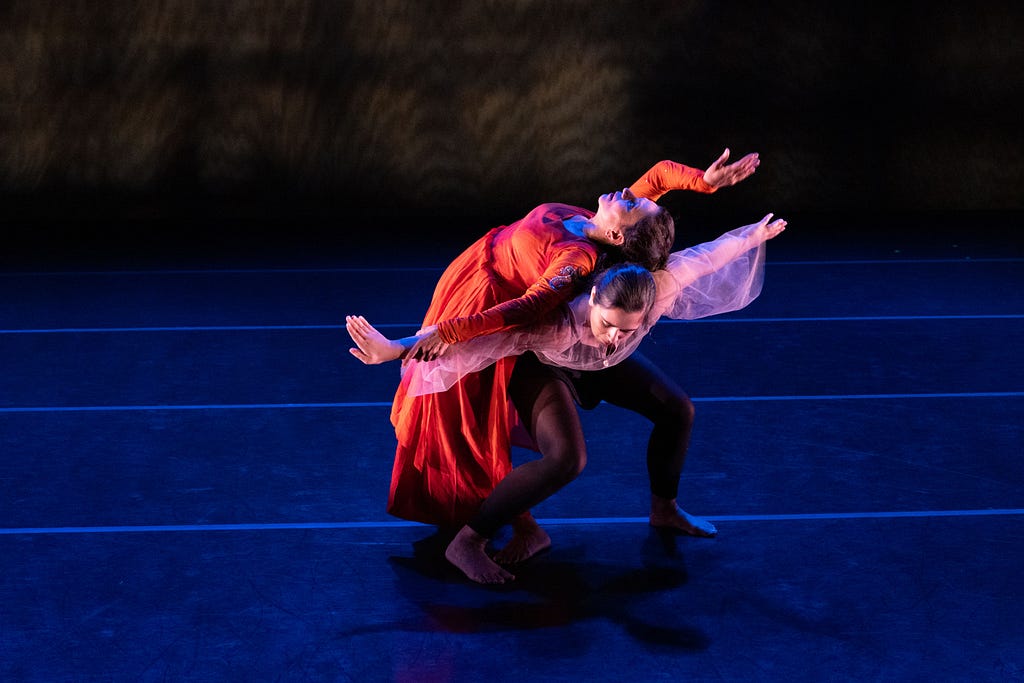
This intergenerational layering is particularly vivid in the duets and ensemble moments, where dancers negotiated their inherited movements in their unique style and contemporary perspectives. In the duet Split // Stitch between Sharma and Maxine Flasher-Duzgunes, the contrast between distinct movement vocabularies becomes a dialogue about culture, influence, and transformation. There were moments of tension and loss present, yet somehow they allowed for emergent patterns, new forms, and a beautiful shared expression to exist.
The work also invited the audience to inquire what is intentionally left unsaid where there is spoken dialogue interspersed with sections without. “Sometimes what is left out tells us as much as what is included,” Sharma explains. Searching for Dha, a foundational section within the program, deconstructed traditional rhythmic structure by creating layered sound and movement of high and low-frequency strokes. By refraining from over-explaining cultural references, viewers engaged with Dha on their own terms, letting rhythm, breath, and gesture inform the experience. Resulting in a performance that felt intimate, and a space for reflection.
Identity and its negotiation are central to the performance. In Liberate, Sharma stands between two circular pools that seem to reflect different worlds that she inhabits. It was as though she was moving from a confusion of self towards a claim to her own version of self. In moments of improvisation and dialogue across generations, dancers navigate inherited forms and self-defined movement. Kathak’s balance of structure and improvisation becomes a metaphor for living between identities: honoring, questioning, and reshaping what one carries forward.
Through Finding My Dha, Monsoon Dance Company celebrates the courage to reinvent, to interpret and honor tradition while also claiming space, carrying lineage, and transforming what has been passed on orally. Rhythm is both a technical skill and a vessel for memory, connection, and liberation. This celebration extends beyond the bodies on stage and invites the audience to consider their own truths and where those truths come from. “We all carry and arrive at different versions of our truth, so I refrain from the colonial urge to document and over-explain cultural references that cater to western viewers,” Sharma reflects. “I want to create space for the audience to lean into how they define their cultural roots and seek their own connection to ‘Dha’, on their own terms. Some stories will be relational, or held in breath and body, and meant to be felt in the moment.”
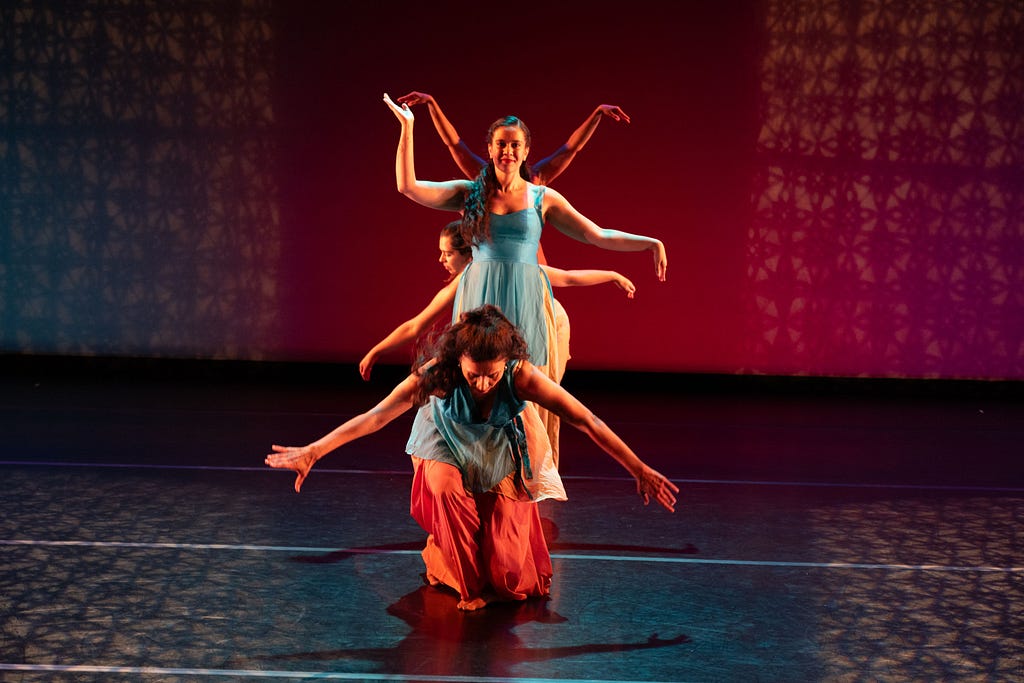
Finding My Dha left the audience with the sense that traditional dance, and more specifically classical Indian dance can hold multitudes. This is also true of our inherited traditions, understandings of cultural identities and selfhood. We each are negotiated sires of emergent identities — vessels for intergenerational voices, mirrors for personal and collective memory, and reflections on what we do with what we are taught and how to express that in the world for emergent futures.
Nkechi Deanna Njaka (she/her) is a practice-based creative researcher, choreography artist, public speaker and culture writer whose work explores the intersection of embodied presence, somatic research, well-being, science, art, and social practice. She is the founder of The Compass, NDN lifestyle studio, and co-founder of the sleep app DreamWell, emphasizing mindfulness and creativity as essential for individual and global well-being.
“Finding My Dha” Intergenerationally was originally published in ODC.dance.stories on Medium, where people are continuing the conversation by highlighting and responding to this story.